- 16303 Hwy 99 Ste B-2, Lynnwood, WA 98087
- Call Us: 425-737-7760
- Hours: Mon - Fri 8am - 6pm / Sat - Sun 9am - 5pm
If your roof is under 15 years old, has isolated damage, and the decking underneath is still solid, a repair is usually the right call. If your roof is over 20 years old, has widespread or recurring leaks, sagging areas, or damage affecting more than 30% of the surface, replacement is almost always the smarter long-term investment. The only way to know for certain is a professional inspection — and for homeowners in Lynnwood, Everett, Edmonds, Mukilteo, and the rest of Snohomish and King County, Skilled Roofing offers a free inspection to give you a straight answer before you spend a dollar.
Every homeowner eventually asks the same question while staring up at a stain on the ceiling or a missing shingle in the yard: is this a quick fix, or the beginning of something bigger? The honest answer is that it depends on the age of your roof, the extent of the damage, and what’s happening underneath the shingles — not just what you can see from the ground.
This guide walks through the signs that point toward repair, the signs that point toward replacement, and the cost, insurance, and inspection factors that should shape your decision. If you’re in the Pacific Northwest, a few local realities — near-constant rain, wind events off Puget Sound, and moss growth — make this decision a little different than it would be in a drier climate, and we’ll cover that too.

In many cases, a roof doesn’t need to be torn off and replaced — it just needs targeted attention. Repair is usually the right move when:

A handful of cracked, curling, or missing shingles in one section, rather than wear spread across the entire roof.
Most asphalt shingle roofs are rated for 20–25 years. If yours is well within that window and otherwise healthy, repair extends its life without the added cost of full replacement.
If a contractor pulls back the damaged shingles and finds dry, structurally sound plywood or OSB decking, that’s a strong sign the rest of the roof is in good shape.
A flat, even roofline (viewed from the street or a ladder) usually means the structural integrity is intact.
If your roof fits this profile, a repair from our roof repair team can typically be completed in a single day and will buy you years of additional life.
Replacement becomes the more responsible — and often more cost-effective — choice when the damage or age has moved past what a patch can solve:
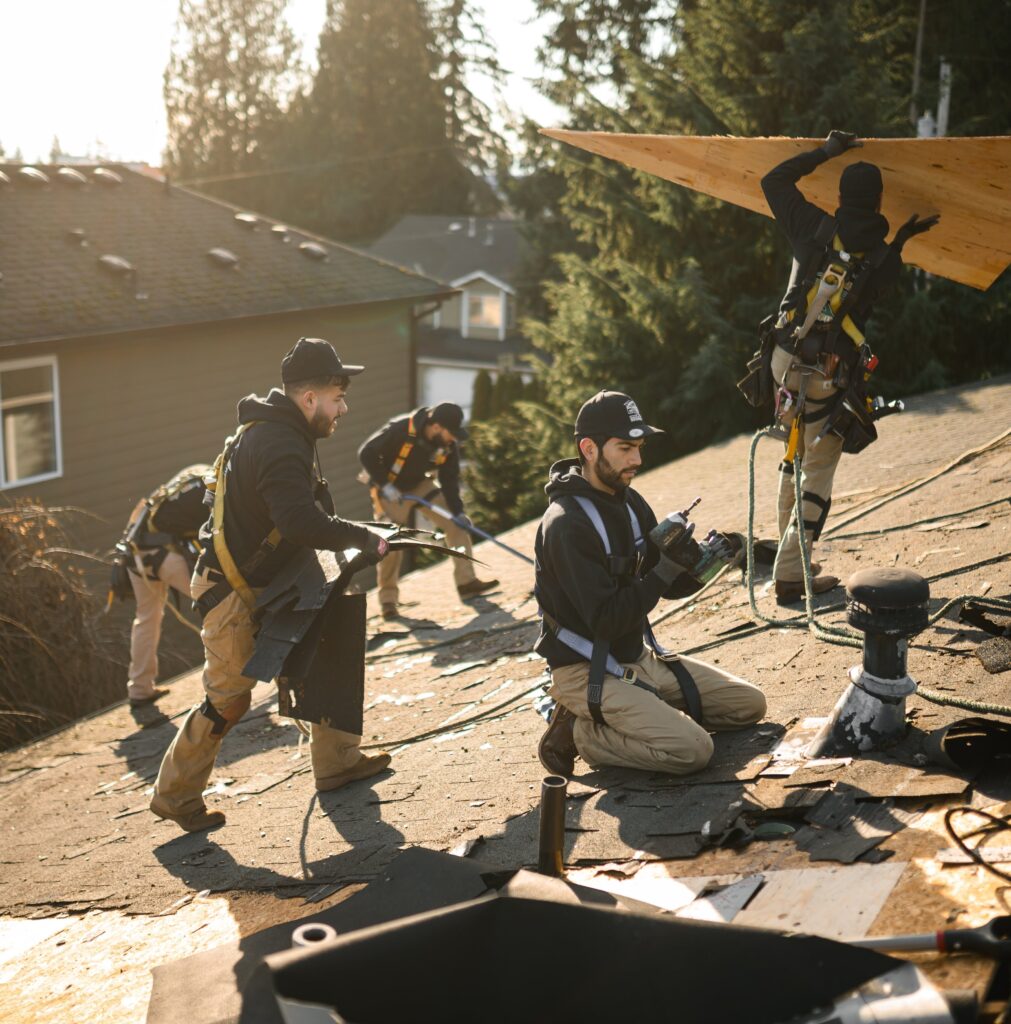

Roofing material lifespan varies significantly, and knowing where your roof sits on this timeline is one of the clearest ways to guide a repair-vs-replace decision.
|
Roofing Material
|
Typical Lifespan
|
Notes for Western Washington
|
|---|---|---|
|
3-Tab Asphalt Shingles
|
15–20 years
|
Shortest lifespan; more susceptible to wind uplift
|
|
Architectural (Dimensional) Asphalt Shingles
|
25–30 years
|
Most common choice in our service area
|
|
PVC / TPO Flat Roofing
|
20–30 years
|
Popular for additions, garages, and low-slope sections
|
|
Metal Roofing
|
40–70 years
|
Higher upfront cost, minimal maintenance
|
|
Wood Shake
|
20–25 years
|
Requires more maintenance in wet climates
|
See our PVC & flat roofing services for more on low-slope and flat roof options.
If your roof is approaching or past the upper end of its material’s expected lifespan, that alone is often reason enough to start planning for replacement rather than continuing to invest in repairs.

Not all damage is created equal. Here’s how the most common issues typically get resolved:
Cost is often the deciding factor, and it’s helpful to see both options side by side.
|
Factor
|
Roof Repair
|
Roof Replacement
|
|---|---|---|
|
Typical cost range
|
Few hundred to a few thousand dollars
|
Several thousand to $20,000+ depending on size and material
|
|
Timeline
|
Same day to 1–2 days
|
1–3 days for most residential homes
|
|
Lifespan added
|
Buys a few years, depending on condition
|
Resets the clock — 20–30+ years
|
|
Best for
|
Isolated, recent damage on a roof under 15 years old
|
Roofs 20+ years old, widespread damage, or recurring issues
|
|
Risk if wrong choice
|
Recurring leaks, wasted repair spend, interior damage
|
Overpaying if repair would have sufficed
|
A useful rule of thumb we share with homeowners: if a repair estimate is running close to 30–50% of what a full replacement would cost, replacement is usually the better long-term value, since you’re not paying twice to fix the same underlying problem down the road.
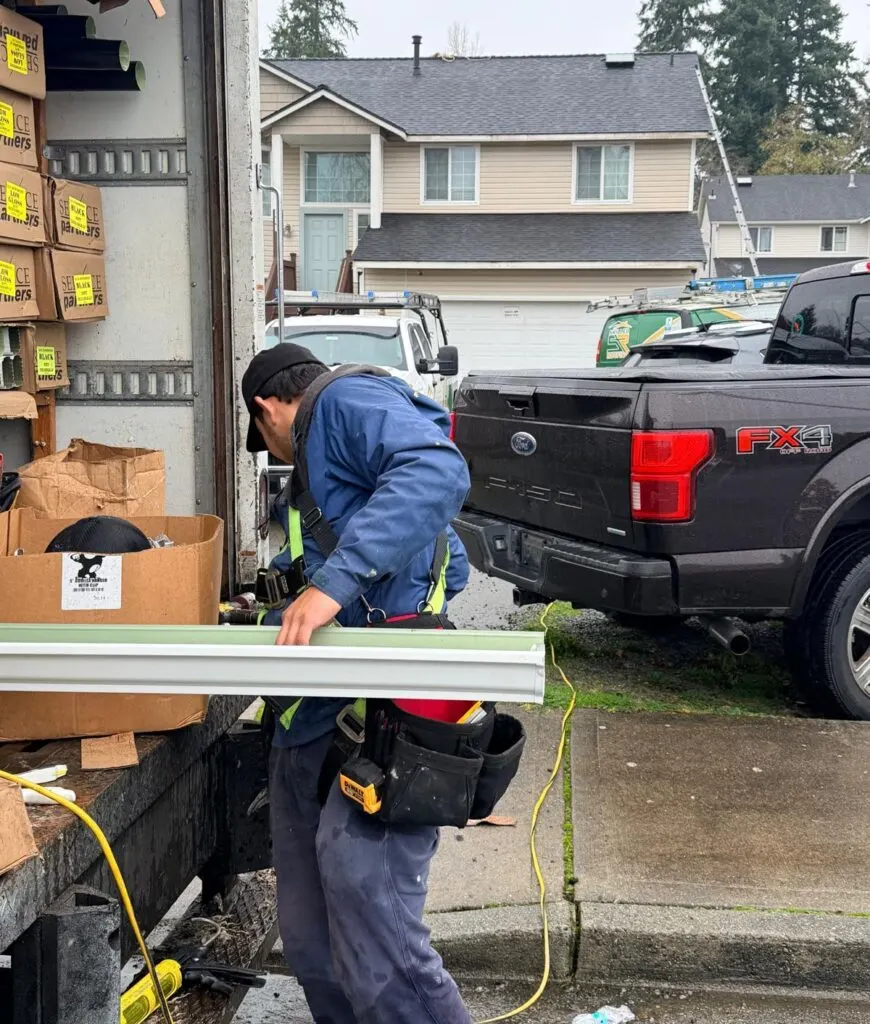
Repairs are meant to be a cost-effective, targeted fix — but there’s a tipping point where continuing to repair an aging roof costs more than simply replacing it. This typically happens when:
At this stage, a repair is essentially a temporary patch on a system that’s already failing. A free inspection from our team will give you an honest read on whether you’ve crossed that line.
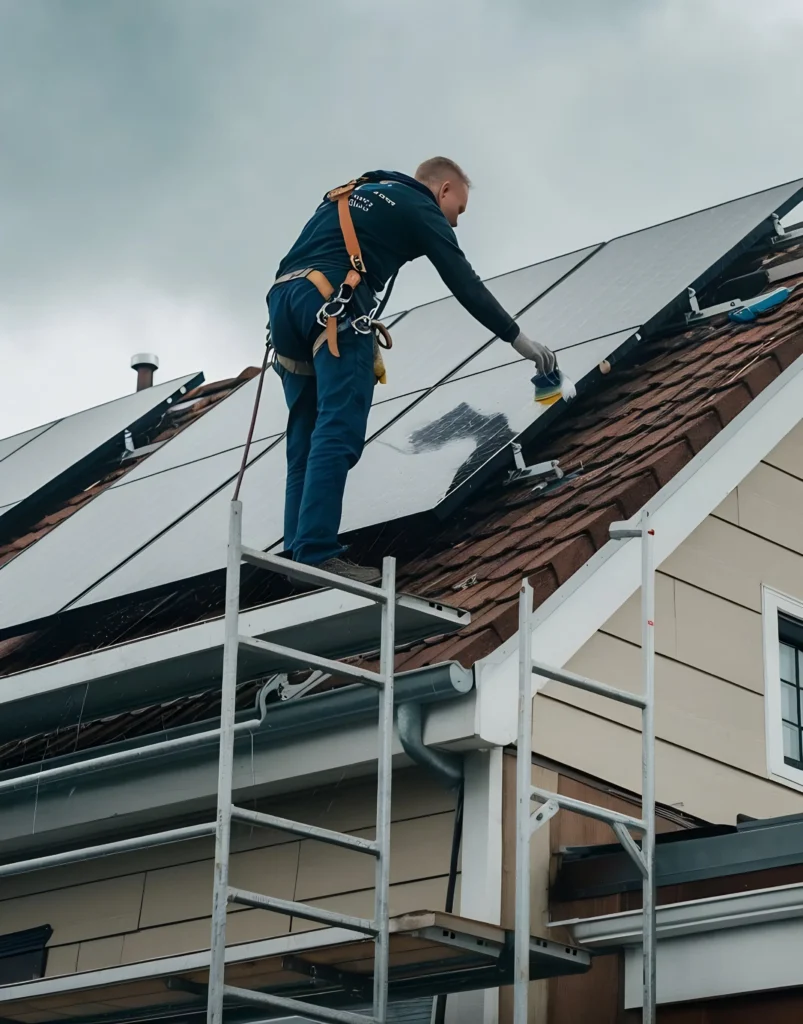
Western Washington sees regular windstorms, particularly through fall and winter, along with the kind of sustained rain that finds every weak point in a roofing system. Storm damage changes the repair-vs-replace calculation in a few important ways:
If you’ve had recent storm damage, our 24/7 emergency roofing service can assess and temporarily secure the roof, followed by a full inspection to determine repair vs. replacement.
Whether insurance covers the cost depends on the cause of the damage, not just its extent. Generally speaking:
Because the distinction matters so much for your claim, documentation is critical. Our team provides detailed photos and damage assessments that homeowners can submit with insurance claims, which is often the difference between an approved and a denied claim. If you’re unsure whether your situation qualifies, it’s worth getting an inspection before you call your insurance company — that way you know what you’re working with.
A thorough inspection is what actually answers the repair-vs-replace question — everything above is context that helps you understand why an inspector reaches the conclusion they do. Here’s what a proper inspection includes:
It’s tempting to make this decision from the ground, or based on a quick look from a ladder — but the factors that actually matter (decking condition, extent of moisture intrusion, flashing integrity, granule loss across the whole roof) usually aren’t visible without a trained eye and a proper inspection.
Skilled Roofing has been serving homeowners throughout Snohomish and King County for 16+ years, holds current licensing, bonding, and insurance, and was recognized as an Excellence in Roofing Award Winner in 2026. We’re a GAF-certified contractor, an NRCA member, and BBB accredited — and every inspection includes a straightforward, no-pressure recommendation, because our goal is to keep your roof performing, not to upsell a replacement you don’t need.
It depends on the roof’s condition and your local market. A minor repair (a few missing shingles, a small flashing fix) is almost always worth doing before listing, since buyers and inspectors flag visible roof issues quickly. A roof nearing the end of its life is a different calculation — some sellers replace it to maximize sale price and avoid buyer negotiations, while others price the home accordingly and disclose the roof’s age instead. A free inspection can tell you which situation you’re in and what a realistic repair-vs-replace cost looks like before you list.
Repairs typically range from a few hundred to a few thousand dollars depending on the scope of damage. A full replacement generally runs from several thousand dollars up to $20,000 or more, depending on the size of the roof, the material chosen, and the complexity of the job. A free inspection from our team will give you an exact, no-obligation estimate for your specific home.
It depends on the cause. Sudden events like windstorms, hail, or fallen trees are typically covered, minus your deductible. Gradual wear from an aging roof is usually not covered. We help homeowners document damage properly so they can submit the strongest possible claim.
Most residential roof replacements in our service area are completed in 1–3 days, weather permitting.
Sometimes, yes — but if you’ve needed multiple repairs in the same area over the past couple of years, or the roof is already near the end of its expected lifespan, continued repairs often end up costing more than a replacement would have. An inspection will tell you whether you’ve reached that point.
Not necessarily. Moss caught early can often be professionally removed through roof cleaning without damage to the shingles. Moss that has been left untreated for years and has lifted shingles at the edges is a different story, and often does point toward replacement of the affected area.
"*" indicates required fields