- 16303 Hwy 99 Ste B-2, Lynnwood, WA 98087
- Call Us: 425-737-7760
- Hours: Mon - Fri 8am - 6pm / Sat - Sun 9am - 5pm
First, protect the inside of your home: place a bucket or container under the leak, move furniture and valuables out of the way, and if the ceiling is bulging with trapped water, relieve it in a controlled way before it collapses. Take photos for insurance, then call a professional roofer — don’t climb onto the roof yourself, especially during a storm. For homeowners across Lynnwood, Everett, Edmonds, Mukilteo, and the rest of Snohomish and King County, Skilled Roofing’s 24/7 emergency team can respond quickly, stop the water from spreading, and determine what caused the leak in the first place.
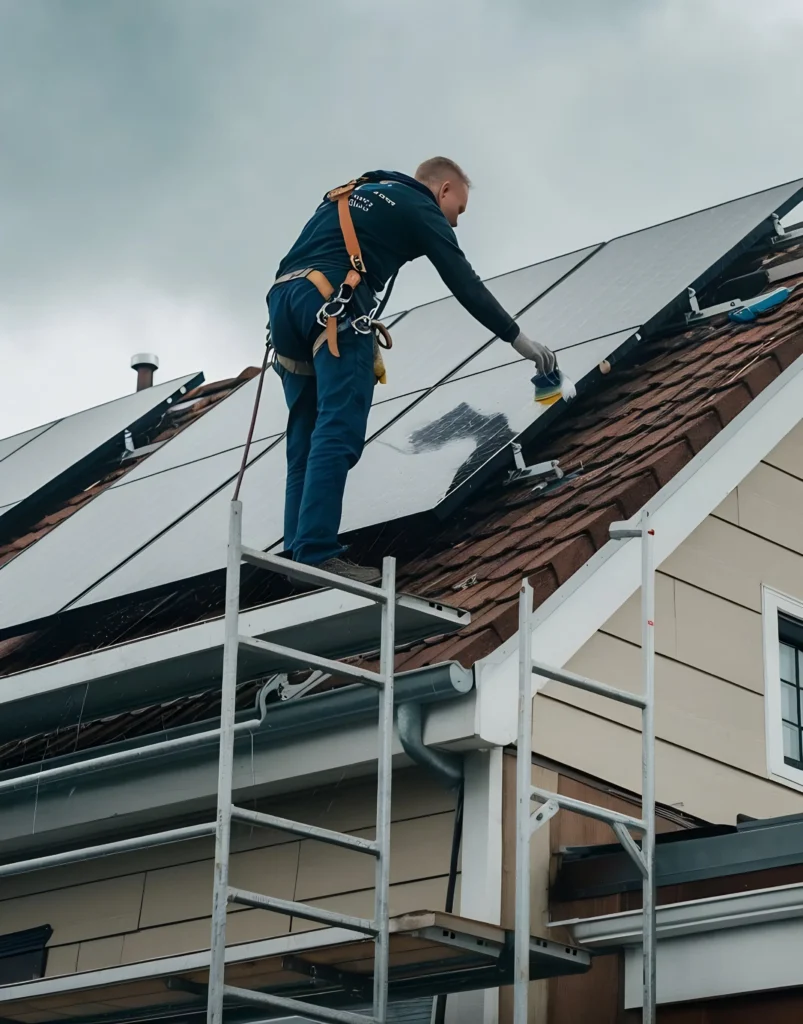
A roof leak rarely announces itself the moment it starts. Water finds the path of least resistance, and that path is often along a rafter or through insulation for days or weeks before it ever shows up as a stain on your ceiling. By the time you notice a drip, the actual entry point may be several feet away from where the water is landing.
In Western Washington, this matters more than most places. Our wet season brings sustained rain and wind events off Puget Sound that can turn a minor, unnoticed weak point into an active leak overnight. Knowing what to do in the first hour — and what to avoid doing — can be the difference between a straightforward repair and a much larger insurance claim.
If you’ve just discovered an active leak, work through these steps in order:
Place a bucket, trash can, or large container directly under the drip. Lay towels or a tarp on the floor around it to protect flooring and furniture. Check the container regularly and empty it before it overflows to prevent additional water damage. If the ceiling begins to bulge or sag, avoid the area beneath it and contact a roofing professional immediately.
Electronics, furniture, and anything water-sensitive should be moved clear of the affected area immediately. If items cannot be moved, cover them with waterproof plastic sheeting to help reduce water damage. Keep children and pets away from the affected area until the leak has been repaired and the space is safe to use again.
If you see a swelling bubble in your drywall or ceiling, water is pooling above it. Placing a bucket underneath and puncturing the center of the bulge with a screwdriver releases the water in a controlled way, which is far better than letting the ceiling collapse on its own.
Take pictures of the water stain, any dripping, and the surrounding area before you clean anything up. This documentation matters if you end up filing an insurance claim.
A wet, sloped, or storm-damaged roof is dangerous to walk on, and without training it’s easy to misidentify the source or cause further damage. Leave the roof itself to a professional.
A same-day or emergency call gets the source identified and temporarily secured before more water gets in.
Never attempt to inspect or patch a roof during active rain, high winds, or after dark. If a leak is severe enough that you're concerned about structural safety or electrical hazards near the water, treat it as an emergency and call our 24/7 emergency roofing line rather than waiting.

Understanding what typically causes leaks in our climate helps you describe the problem accurately to a roofer and can even help you spot early warning signs before a leak starts:

Water travels. A leak that shows up as a stain in your hallway ceiling might actually be entering the roof several feet away, running along the underside of the decking or down a rafter before dripping at the lowest point it can find. This is exactly why DIY leak-chasing so often fails — homeowners patch the spot directly above the stain, and the leak continues because the real entry point was never touched.
A professional inspection traces the water’s path from the interior stain, through the attic space, and up to the exterior roofing surface, checking flashing, vent boots, valleys, and shingle condition along the way to confirm the actual source before any repair is made.
It’s worth understanding the difference between what you can safely do while waiting for help and what actually resolves the leak.
|
Factor
|
DIY Temporary Fix
|
Professional Emergency Repair
|
|---|---|---|
|
What it addresses
|
Symptoms indoors (dripping, water spread)
|
The actual source on the roof
|
|
Safety
|
Limited to safe interior steps only
|
Trained crew with proper harnessing and equipment
|
|
Effectiveness
|
Buys time; does not stop water entry
|
Locates and seals the true entry point
|
|
Risk if relied on alone
|
Continued hidden water damage, mold
|
Minimal — issue is diagnosed and documented
|
|
Typical cost
|
Low (bucket, tarp, patience)
|
A few hundred to a couple thousand dollars depending on scope
|
If the leak is active and it’s unsafe to wait, our 24/7 emergency roofing service can tarp and temporarily secure the affected area, then schedule the full repair once conditions allow.
As with most roofing claims, coverage depends on cause rather than the fact that a leak occurred. Sudden events — a windstorm, a fallen branch, hail — are typically covered, minus your deductible. A leak that developed gradually from an aging roof or long-neglected maintenance issue is usually treated as a maintenance matter and is not covered.
This is another reason prompt professional documentation matters: a technician who inspects the leak while it’s active and photographs the cause gives you a much stronger basis for a claim than trying to reconstruct what happened after the fact.

Once the immediate leak is resolved, a few maintenance habits go a long way toward preventing the next one, particularly in a climate as wet as ours:
so water has a clear path off the roof edge instead of backing up under shingles.
ideally in late spring, to catch flashing wear or shingle damage before the fall rains arrive.
with professional roof cleaning before it has a chance to lift shingle edges.
A single loose shingle or worn seal is a much smaller job than the water damage it can eventually cause.
Skilled Roofing has served homeowners across Snohomish and King County for 16+ years, holds current licensing, bonding, and insurance, and was recognized as an Excellence in Roofing Award Winner in 2026. We’re a GAF-certified contractor, an NRCA member, and BBB accredited. When you call about an active leak, our team responds with the goal of stopping the water, finding the real source, and giving you an honest, documented explanation of what happened and what it will take to fix it properly.
Dealing with an active roof leak right now? Schedule Your Free Roof Inspection → | Call our 24/7 line now: 425-737-7760
You can apply a temporary patch with roofing tar or flashing sealant if it’s safe to access the area, but treat it as a stopgap, not a fix. These products don’t bond the same way a professional repair does, they often trap moisture underneath instead of sealing it out, and climbing onto a wet or storm-damaged roof is genuinely dangerous. It’s safer to contain the water indoors and let a licensed roofer make the actual repair.
Most emergency leak repairs and tarping calls range from a few hundred dollars for a straightforward flashing or vent boot fix, up to a couple thousand dollars if the leak has caused deck damage that needs to be replaced before the roof can be resealed. A technician can give you an exact number once they’ve located the source and assessed how far the water has traveled.
It depends on the cause. Leaks caused by a sudden event, such as wind-driven rain during a storm or a tree limb strike, are typically covered, minus your deductible. Leaks caused by gradual wear, like aging flashing or a roof past its expected lifespan, are usually considered a maintenance issue and are not covered. Detailed photo documentation from the repair technician makes a real difference in how these claims are evaluated.
Not long. Even a slow drip can saturate insulation, stain drywall, and begin growing mold within 24 to 48 hours, and water has a way of traveling along rafters before it ever shows up on your ceiling, so the visible damage is usually smaller than the actual problem. A leak found during dry weather can typically wait a few days for a scheduled repair; a leak during an active storm should be treated as same-day.
This is one of the most common patterns we see in Western Washington and it almost always points to wind-driven rain finding a weak seal, rather than a hole in the roof itself. Wind can force water sideways and upward under shingle edges, through flashing that seals fine in calm rain, or through a loose ridge vent, which is why the leak seems to disappear the moment the wind dies down.
The stain itself may lighten as it dries, but the underlying leak doesn’t fix itself. A stain means water has already reached your drywall, which means it’s had a path through your roofing system at least once, and in the Pacific Northwest’s wet season, it will very likely happen again. It’s worth having the source identified even if the stain looks minor.
Related Resources
"*" indicates required fields