One roofer says the leak needs a small repair. Another recommends replacing a much larger section. A third gives you a price but barely explains what is wrong.
Which one do you trust?
Roof repairs can get confusing quickly, especially when homeowners receive very different recommendations. Around Lynnwood, rain, persistent moisture, shaded roof slopes, moss, and tree debris can also affect different homes in different ways. Even the place where water appears indoors may not reveal where the leak actually started.
Before hiring a roof repair contractor in Lynnwood, ask questions that help you understand the problem, not just the price. These 10 can make that conversation much more useful.
1. Are You Licensed and Insured?
Start here before discussing materials or repair options.
Roofing puts workers, ladders, tools, and materials above and around your property. Ask the contractor about applicable licensing and insurance and verify the information when necessary.
Pay attention to the response, too. Basic business questions shouldn’t produce vague answers or resistance.
Once you know who you are dealing with, move on to what they know about roofs in your area.
2. What Problems Do You Commonly Find on Lynnwood Roofs?
Two homes on the same street can have surprisingly different roofing conditions.
One may receive plenty of sun after rain. Another might sit beneath mature trees, leaving one slope shaded and allowing needles or leaves to remain damp in a valley.
A contractor who regularly works around Lynnwood should understand how moisture, shade, moss, debris, flashing, ventilation, and roof age can interact.
Ask what they commonly encounter locally. Specific examples are much more useful than hearing, “We’ve worked on every type of roof.”
Local experience matters most when the contractor can connect it to your property.
3. Where Is My Leak Actually Starting?
A stain on the ceiling doesn’t necessarily sit directly below the roof defect.
Water may enter near flashing, a penetration, a valley, or another vulnerable point. Once beneath the roofing material, it can follow decking or framing before becoming visible indoors.
Ask the contractor to explain how they traced the leak.
What did they inspect? What evidence points to the suspected entry point? Can they show you the problem?
If you’ve been searching for roof repair near me after suddenly finding water indoors, speed probably feels important. It is. But repairing the wrong spot quickly won’t solve much.
The contractor should be able to explain why a particular area needs attention.
4. Why Repair This Roof Instead of Replacing It?
Not every leak calls for a new roof.
An isolated flashing failure or limited area of material damage may be repairable when the rest of the roofing system remains in serviceable condition.
But repeated repairs tell a different story.
Imagine fixing one section this year, another several months later, and then finding deterioration somewhere else. At some point, continuing with isolated repairs may offer poor value.
Ask the roofer to show you the condition beyond the obvious problem. Is the damage localized? How does the surrounding material look? Are there concerns elsewhere?
You want to understand why repair or replacement makes sense for this particular roof.
5. What Does the Estimate Actually Include?
“Roof repair: $2,000” doesn’t tell you much.
Which section will the crew work on? What materials will they remove? Does the repair involve flashing? Is cleanup included? What happens if damaged decking appears after the surface material comes off?
Two contractors can quote very different prices because they are proposing very different work.
Read the scope rather than comparing only the final numbers.
You don’t need to understand every roofing term. Ask about anything unclear until you know what the contractor intends to repair and what your payment covers.
6. How Will the New Materials Work With My Existing Roof?
Homeowners often focus on whether replacement shingles will match. That’s understandable, but appearance is only one consideration.
Existing roofing materials change after years of exposure to sun, rain, wind, and moisture. New material may therefore look somewhat different even when it is suitable for the repair.
Depending on the problem, the contractor may also need to consider flashing, underlayment, fasteners, sealants, or other components.
A better question than “Will it match?” is:
“How will the repaired area integrate with the roof that’s already here?”
The answer should address performance as well as appearance.
7. What Happens if You Find Hidden Damage?
Some roofing problems don’t become fully visible until materials come off.
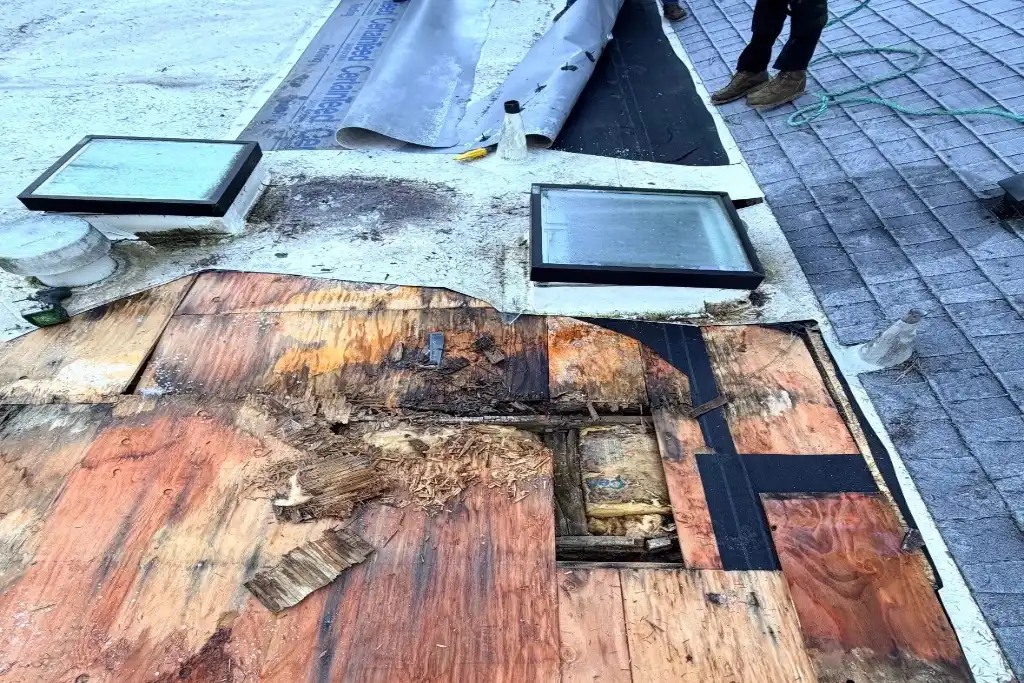
Suppose the crew opens the leak area and discovers deteriorated decking underneath. What happens then?
Ask before the project begins.
A good process should keep you informed. The contractor may document what they found, explain why it matters, discuss how it changes the repair, and address additional costs before moving forward.
Unexpected damage can happen. Unexpected charges without a clear explanation are another matter. Establishing the process beforehand can prevent an uncomfortable conversation after the roof is already open.
8. How Will You Protect the Property Around My House?
The repair happens overhead, but the work area extends to the ground.
Ladders need space. Old materials have to come down. Nails and debris require cleanup. Landscaping, siding, decks, driveways, fences, or outdoor equipment may sit below the work zone.
Ask how the crew plans to handle those areas.
This becomes particularly important when access is tight or landscaping sits close to the house. If there’s something you’re concerned about, point it out before work begins.
A contractor should consider the entire work area, not only the section of roof being repaired.
9. What Does the Warranty Cover?
“We warranty our work” is a starting point, not the complete answer.
Ask what the applicable warranty covers and how long the coverage lasts. Find out whether workmanship and material coverage are separate and whether any conditions or exclusions apply.
Then ask a practical question:
What should you do if the repaired area develops a problem?
Get applicable warranty terms in writing. You don’t need to turn the conversation into a legal review, but you should understand what protection comes with the repair before approving the project.
10. What Should I Watch After the Repair?
This question often gets overlooked.
Suppose the original problem appeared during several days of rain. Should you watch the previous stain during the next wet period? Check the attic? Keep an eye on another area the contractor noticed?
Ask before the crew leaves.
The roofer may also identify something that doesn’t need work today but deserves monitoring. That’s useful information. Not every imperfect area requires immediate repair.
Knowing what deserves attention can help you avoid both ignoring a developing problem and worrying unnecessarily about normal roof aging.
What Answers Should Make You Cautious?
Sometimes it’s not what a contractor says but what they can’t explain.
Be careful when someone recommends increasingly expensive work without showing why, pressures you to approve a project immediately, avoids basic credential questions, or provides an estimate so vague that you cannot tell what you’re purchasing.
Price needs context too.
The cheapest estimate isn’t automatically the worst, and the highest isn’t necessarily the best. Compare the problem each contractor identified, the proposed scope, materials, warranty, and approach to unexpected conditions.
Most importantly, ask yourself one simple question: Do I understand why this repair is being recommended?
If the answer is no, keep asking questions.
Why Local Experience Matters for Roof Repair in Lynnwood
Not every Lynnwood roof experiences weather in exactly the same way.
A home surrounded by tall trees may stay shaded longer after rainfall. Another property may have more open exposure. Roof pitch affects drainage, while valleys, debris accumulation, ventilation, previous repairs, and material age introduce additional variables.
That’s why local knowledge shouldn’t amount to a generic speech about Pacific Northwest rain.
An experienced roof repair contractor in Lynnwood should apply that knowledge to the house in front of them and explain how its particular conditions influence the repair.
Frequently Asked Questions
Can a roof leak start somewhere other than above the ceiling stain?
Yes. Water can travel along decking, framing, or other surfaces before becoming visible indoors. An inspection may need to look beyond the area directly above the stain.
Should I choose the cheapest roof repair estimate?
Not based on price alone. Compare the scope, materials, warranty, treatment of hidden damage, and what each contractor actually plans to repair.
Can a roof be repaired during Lynnwood’s wet weather?
It depends on the repair, roof conditions, and available weather window. The contractor should determine whether the work can proceed while keeping exposed areas appropriately protected.
Why might replacement shingles look different?
Existing roofing materials weather and change appearance over time. Newly installed material may look different even when it is suitable for the repair.
What if my roof leaks again after a repair?
Document where and when you notice moisture and arrange an inspection. The issue may involve the repaired section, another water entry point, or an unrelated problem.
Understand the Repair Before You Approve It
You don’t need to become a roofing expert before hiring one.
You should, however, understand what the contractor found, what needs attention, and why the proposed work makes sense.
Ask to see damaged areas. Question recommendations you don’t understand. Compare the actual scope rather than focusing only on price.
If your Lynnwood home has a leak, damaged flashing, deteriorated roofing materials, or another roofing concern, Skilled Roofing can inspect the affected area and recommend a repair approach based on the roof’s actual condition. Call 425-737-7760 to schedule an inspection.