
Roof installation depends on more than materials and tools. Every time a roofing crew opens a section of an existing roof, moves bundles into position, or prepares the next stage of work, the weather becomes part of the day’s plan.
That makes August particularly useful for roof installation in Lynnwood. Compared with the wetter months typical of Western Washington, stretches of dry late-summer weather can give roofing crews longer opportunities to organize work without repeatedly shifting into rain-protection mode.
The advantage is not simply that “sunny weather is better for roofing.” Dry conditions can influence how a crew sequences work, manages materials, controls debris, moves around the property, and closes out unfinished areas at the end of the day. Understanding these practical differences can help Lynnwood homeowners know what professional installation planning actually looks like.
What Does a Dry Weather Window Mean to a Roofing Crew?
A homeowner may see a forecast showing several clear days and think, “Great, the roof can go on.”
A roofing crew sees something more detailed.
They need to determine how much work they can reasonably open, complete, and secure within the available conditions. That requires coordinating labor, equipment, material placement, tear-off areas, property access, and the forecast.
A dry weather window gives the crew more control over that coordination.
Instead of constantly switching between productive roofing work and protecting the site from precipitation, workers can maintain a steadier rhythm between different tasks. That does not mean rushing through the installation. It means having fewer weather-driven changes competing with the planned workflow.
For a professional crew, the value of an August dry spell comes down to one word: control.
Can Dry August Days Make Tear-Off More Manageable?
Removing existing roofing creates one of the most active stages of a replacement project.
Old roofing materials need to come off the structure and move safely to a designated disposal area. At the same time, workers need to maintain safe access around the roof and keep the property below organized.
Dry weather can make that process easier to control.
Workers can establish debris routes, position collection equipment, and move removed materials without rainfall complicating surfaces around the house. A dry work area can also make it easier to maintain clearly defined zones for roofing materials, equipment, and discarded materials.
Most importantly, a professional crew can coordinate the amount of roof it opens with the amount of work it expects to complete.
A sunny morning should never encourage unnecessary exposure. Good roofing practice involves working in manageable sections regardless of how promising the forecast looks.
Why Does Material Movement Matter During Roof Installation?
Roofing materials move several times before they become part of your home.
They arrive at the property, get staged in appropriate locations, move toward the active work zone, and eventually reach the roof. Each movement needs coordination because roofing materials can be heavy, bulky, and spread across different parts of the project.
Dry August conditions can simplify those movements.
Crews can organize shingle bundles, underlayment, flashing components, fasteners, and other supplies without having to repeatedly rearrange the site in response to rainfall.
Efficient staging also reduces unnecessary trips across the property.
That matters because a well-run roof installation should not turn the entire yard or driveway into an uncontrolled construction zone. Contractors should know where incoming materials belong, where removed materials will go, and which pathways workers need to keep clear.
The homeowner may never see this planning reflected in the finished shingles, but it can make a noticeable difference during the project itself.
How Can Dry Weather Improve the Flow of Work Across the Roof?
Roofing crews rarely perform one task from morning until afternoon.
Different workers may handle removal, material movement, preparation, installation details, and cleanup. These activities need to stay coordinated so one part of the crew does not unnecessarily slow another.
Dry conditions can help preserve that coordination.
For example, workers can move materials toward the next active section while another part of the crew completes current installation work. Debris removal can continue without repeatedly stopping to cover or relocate materials. Ground crews can keep work areas organized while roof crews progress through their assigned sections.
This continuity can make the project feel more orderly from the homeowner’s perspective.
It can also give supervisors a clearer view of how the day’s work is progressing because fewer weather interruptions force them to reorganize labor unexpectedly.
Does August Sunshine Create Its Own Installation Challenges?
A dry day can still demand adjustments.
Roofing surfaces exposed to direct August sunshine can become considerably warmer than the surrounding air. Workers experience those temperatures directly because they spend much of the day on the roof rather than at ground level.
Materials can also respond differently to warmer surface conditions.
Professional crews need to consider actual conditions on the roof instead of relying only on the temperature displayed in a weather forecast. Work practices may need to change as sunlight moves across different roof slopes throughout the day.
A shaded north-facing section, for example, may feel very different from a roof plane receiving direct afternoon sun.
This is why professional weather planning involves more than avoiding rainfall. Contractors also need to consider heat, surface conditions, worker safety, and manufacturer requirements while organizing the day’s work.
How Should a Crew Use a Dry Day Without Rushing the Installation?
Good weather can create efficiency, but it should never create pressure to sacrifice workmanship.
A roofing crew may have more uninterrupted working time during a dry August day, yet every installation detail still requires proper attention. Flashing transitions, roof edges, penetrations, fastener placement, underlayment, and other components need to follow the appropriate installation requirements.
Experienced crews use favorable conditions to create a controlled workflow, not an accelerated shortcut.
That distinction matters.
A dry forecast may allow workers to remain productive for longer stretches, but the crew still needs to stop and address details correctly. Installation quality should determine the pace of work rather than a desire to cover as much square footage as possible before the end of the day.
Weather provides the opportunity. Workmanship determines the result.
How Should a Roofing Crew Prepare for Changing August Conditions?
Dry August weather does not eliminate uncertainty.
A professional roofing crew should begin the day knowing how it will respond if conditions change. That preparation should happen before workers begin opening active roof sections.
The plan may include:
- Rechecking short-term weather conditions throughout the workday
- Limiting active work areas to manageable sections
- Keeping protective materials accessible
- Securing loose roofing materials and packaging
- Monitoring conditions around unfinished areas
- Adjusting work if roof surfaces become unsuitable
- Communicating weather-related changes within the crew
- Making sure active areas are appropriately secured before leaving the site
The important difference is preparation versus reaction.
A crew that already knows how it will adjust can respond more efficiently than one that begins making decisions only after conditions change.
For Lynnwood roof installation projects, that flexibility matters even during relatively dry periods.
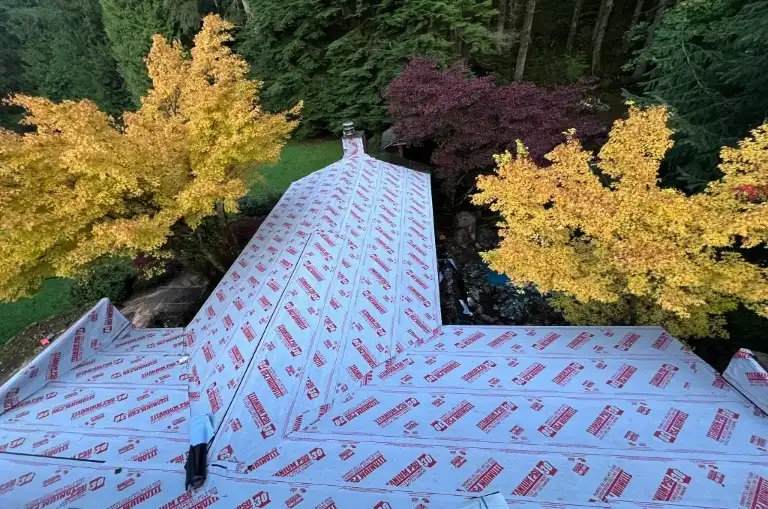
Can Dry Conditions Make Property Protection Easier to Manage?
Roof installation does not happen only above your home.
Crews also work around driveways, walkways, landscaping, decks, garages, and other areas close to the structure. Workers move ladders and materials through these spaces while old roofing materials come down from above.
Dry weather can make ground-level jobsite management more predictable.
Contractors can establish designated movement paths and disposal areas without precipitation changing ground conditions throughout the day. Workers can also maintain clearer separation between material-storage areas and debris zones.
Property protection should still remain part of the plan regardless of the forecast.
Landscaping near the roofline may require protection. Vehicles may need to move away from active areas. Outdoor furniture and other movable objects may need temporary relocation.
The goal is to keep roofing activity concentrated within defined work zones instead of allowing the project to spread unnecessarily across the property.
Why Does End-of-Day Planning Matter Even After a Completely Dry Day?
One overlooked part of roof installation happens when the crew is preparing to leave.
A dry day does not mean contractors should assume identical conditions will continue overnight or into the next morning. The crew needs to finish the day with the project in a controlled condition.
That includes collecting loose materials, checking active work areas, removing unnecessary debris, securing equipment, and ensuring unfinished portions of the project receive appropriate attention.
End-of-day organization also helps the next workday begin efficiently.
Instead of arriving to sort through scattered materials or reconstruct yesterday’s work zones, crews can start from an organized site and continue the installation sequence.
For homeowners, this is another sign of professional project management. The property should not look abandoned simply because workers have gone home for the evening.
What Happens When a Short Shower Interrupts a Dry August Workday?
An unexpected shower does not automatically mean the entire project has gone wrong.
What matters is how prepared the crew is when conditions shift.
Professional contractors monitor conditions and make decisions based on the stage of work, roof surface, safety, and materials involved. If work needs to pause, protecting the active area takes priority over maintaining production.
This is another reason manageable work sections matter.
The crew has a much clearer situation to control when it has opened only the amount of roofing it can reasonably manage. Overextending the work area simply because the morning looked sunny can create unnecessary complications when weather changes.
Good August installation planning therefore involves taking advantage of dry conditions without becoming dependent on them.
How Can Dry Weather Affect Jobsite Cleanup?
Roof installation produces more than large pieces of old roofing.
Small debris, packaging, fasteners, roofing fragments, and other materials can accumulate as work progresses. Waiting until the entire project ends to address everything can make the property unnecessarily difficult to manage.
Dry conditions can support ongoing cleanup.
Ground crews can collect debris as roofing work progresses, keep access routes open, and prevent waste from spreading unnecessarily around the home.
A controlled cleanup process may include:
- Collecting tear-off material throughout the day
- Keeping disposal areas organized
- Clearing primary walkways
- Removing packaging as new materials get opened
- Checking around landscaping and hardscaping
- Conducting a thorough final cleanup when installation finishes
Continuous cleanup is not merely about appearance. It supports a more organized work environment for the crew and reduces disruption for the homeowner.
Why Does Local Roofing Experience Still Matter on a Clear August Day?
Lynnwood homeowners may reasonably assume that dry summer weather makes roofing straightforward.
It certainly helps, but local conditions still require judgment.
A crew familiar with Western Washington roofing understands that favorable weather should be treated as a working opportunity rather than a guarantee. Experienced contractors plan each day’s production around what they can safely complete and secure while remaining prepared for changing conditions.
That practical experience influences decisions that homeowners may never notice, including how much material gets staged, how large an active work section becomes, when certain tasks begin, and when conditions justify changing the plan.
These small operational decisions can add up throughout an installation.
A clear forecast helps. Knowing what to do with that forecast matters more.
Can Dry August Weather Make Roof Installation in Lynnwood Easier?
Yes. Its biggest advantage is not simply the absence of rain.
Dry August conditions can give roofing crews greater control over work sequencing, tear-off zones, material movement, property access, debris management, daily cleanup, and changing jobsite priorities. When fewer weather interruptions occur, contractors can devote more attention to maintaining an organized installation workflow.
But a dry day cannot replace professional workmanship.
Successful roof installation in Lynnwood still depends on proper installation methods, experienced decision-making, careful project management, and a crew prepared to adjust when conditions change.
A professional roofing team do not simply wait for good weather. They know how to use a good weather window effectively.
Frequently Asked Questions
1. Why do roofers limit how much roofing they remove at once?
Working in manageable sections helps crews maintain control of exposed areas and respond more effectively if weather conditions change.
2. Can August heat affect roofing materials during installation?
Yes. Direct sunlight can heat roof surfaces and materials, so crews may adjust handling and work practices based on actual conditions.
3. How do roofers protect an unfinished roof overnight?
Crews secure active sections and use appropriate temporary protection when needed before leaving the property.
4. Why does material staging matter during roof installation?
Organized staging keeps roofing materials accessible while reducing unnecessary movement around driveways, landscaping, and active work areas.
5. Should roofing materials stay outside during an August installation?
Materials should be stored and staged according to manufacturer requirements and protected from conditions that could affect their performance.
Make the Most of Your Roof Installation Window
If you are planning a new roof, favorable August conditions can create a useful opportunity to move the project forward. The real value comes from pairing that weather window with a roofing crew that understands jobsite organization, installation sequencing, property protection, and the changing conditions common to Western Washington.
Skilled Roofing provides professional roof installation in Lynnwood with a locally informed approach to project planning and workmanship. Contact Skilled Roofing at 425-737-7760 to schedule an evaluation and discuss the installation needs of your home.
A dry forecast may open the window. Careful planning and professional installation make that window count.