If you’ve ever noticed a water stain spreading across your ceiling after a rainy day, you’re not alone. Roof leaks are one of the most common problems homeowners face in Lynnwood, and they often begin with something so small that it’s easy to overlook. A loose shingle, cracked flashing, or clogged gutter may not seem urgent at first, but with Lynnwood’s steady rainfall, even a minor issue can quickly turn into expensive water damage. Understanding what causes roof leaks can help you act early and avoid larger repairs. If you’re looking for a trusted roofing company Lynnwood homeowners rely on or need roof repair in Lynnwood, knowing what to watch for is the first step toward protecting your home.
Here’s the good news: most roof leaks don’t happen overnight. Your roof usually gives you warning signs before serious damage occurs. Let’s take a closer look at what causes leaks and what you can do before the next Lynnwood rainstorm puts your roof to the test.
Why Do Roof Leaks Happen So Often in Lynnwood?
Living in Lynnwood means enjoying beautiful greenery and a mild climate, but it also means your roof deals with a lot of rain throughout the year. Day after day, moisture, wind, falling branches, and moss slowly wear down roofing materials.
The tricky part is that roof damage doesn’t always announce itself. Water can sneak beneath your shingles long before you notice a stain on your ceiling. By the time a leak becomes visible inside your home, moisture may already be affecting your insulation, roof decking, or even the wooden structure beneath your roof.
That’s why routine inspections matter. Catching a small problem early is almost always easier and less expensive than repairing widespread water damage later.
1. Missing or Damaged Shingles Are Often the First Problem
Think of your shingles as your roof’s shield. They protect your home from rain, wind, and moisture every single day.
Over time, it’s completely normal for shingles to wear out. Strong winds can loosen them, years of weather exposure can cause them to crack, and older shingles may begin to curl or lose their protective surface.
The problem is that your roof works as one complete system. If even one shingle goes missing, rainwater can begin working its way underneath the surrounding materials.
You may notice:
- Shingles lying in your yard
- Bare spots on the roof
- Curling edges
- Cracked or broken shingles
- Granules collecting inside your gutters
If you notice any of these signs, don’t wait until the next heavy rain. Scheduling roof leak repair early can prevent much larger repairs later.
2. Flashing Problems Can Let Water In Without You Realizing It
Some of the most common roof leaks don’t happen in the middle of the roof at all.
Instead, they develop around areas where different roofing materials meet. These include places like:
- Chimneys
- Skylights
- Roof valleys
- Plumbing vents
- Areas where the roof meets a wall
These sections rely on metal flashing to keep water out.
As flashing gets older, it may loosen, rust, or develop small gaps. Those tiny openings are all rainwater needs to find its way inside.
The frustrating part is that flashing damage often stays hidden until you already have water inside your attic or ceiling. A professional inspection can catch these weak spots before they become expensive repairs.
Could Your Gutters Be Causing Your Roof Leak?
Most homeowners think of gutters as something that simply moves rainwater away from the house. In reality, they’re an important part of your entire roofing system.
When gutters become packed with leaves, pine needles, moss, or roof debris, water has nowhere to go. Instead of flowing safely away, it backs up under the edge of your roof.
Over time, that trapped moisture can damage shingles, rot wood, and eventually find its way into your home.
Fortunately, this is one of the easiest roofing problems to prevent. Keeping your gutters clean throughout the year allows rainwater to drain properly and reduces unnecessary stress on your roof.
3. Moss Might Look Harmless, But It Can Shorten the Life of Your Roof
If you’ve walked through Lynnwood neighborhoods, you’ve probably seen roofs covered with patches of green moss. While it might seem harmless, moss is actually one of the biggest threats to roofing systems in the Pacific Northwest.
Moss holds moisture against your roof long after it rains. Instead of allowing the shingles to dry, it keeps them constantly damp.
Over time, moss can:
- Lift shingles away from the roof
- Trap water beneath roofing materials
- Speed up shingle deterioration
- Cause wood rot underneath the roof
- Reduce the overall lifespan of your roofing system
Many homeowners try to scrape moss off themselves, but that can accidentally damage shingles. Professional roof cleaning removes moss safely while protecting the roofing material underneath.
4. Small Roof Components Can Create Big Problems
Not every roof leak starts with shingles.
Your roof also has several smaller components that work together to keep water out. One of the most overlooked is the rubber boot that seals plumbing vents.
After years of sun exposure and changing temperatures, these rubber seals naturally begin to crack or dry out. Once that happens, rainwater can slip through the opening and leak directly into your attic.
Because these parts are relatively inexpensive to replace, fixing them early can save you from much larger repairs later.
5. Is Your Roof Simply Getting Older?
Every roof has a lifespan. Even if it has been well maintained over the years, roofing materials naturally wear down with time. Lynnwood’s wet climate can speed up that process, especially if your roof has been through years of heavy rain, strong winds, and seasonal storms.
You don’t always need a full roof replacement, but it’s important to know when your roof is telling you it needs attention.
Here are a few signs your roof may be reaching the end of its life:
- You’ve had multiple leaks in different areas.
- Shingles are curling, cracking, or missing.
- Large amounts of shingle granules are collecting in your gutters.
- Parts of the roof feel soft or appear to sag.
- Repairs have become more frequent over the past few years.
If you’re unsure whether your roof needs repairs or replacement, a professional inspection can help you make the right decision. An experienced roofing company Lynnwood homeowners trust will explain your options honestly instead of recommending work you don’t need.
6. Storm Damage Isn’t Always Easy to Spot
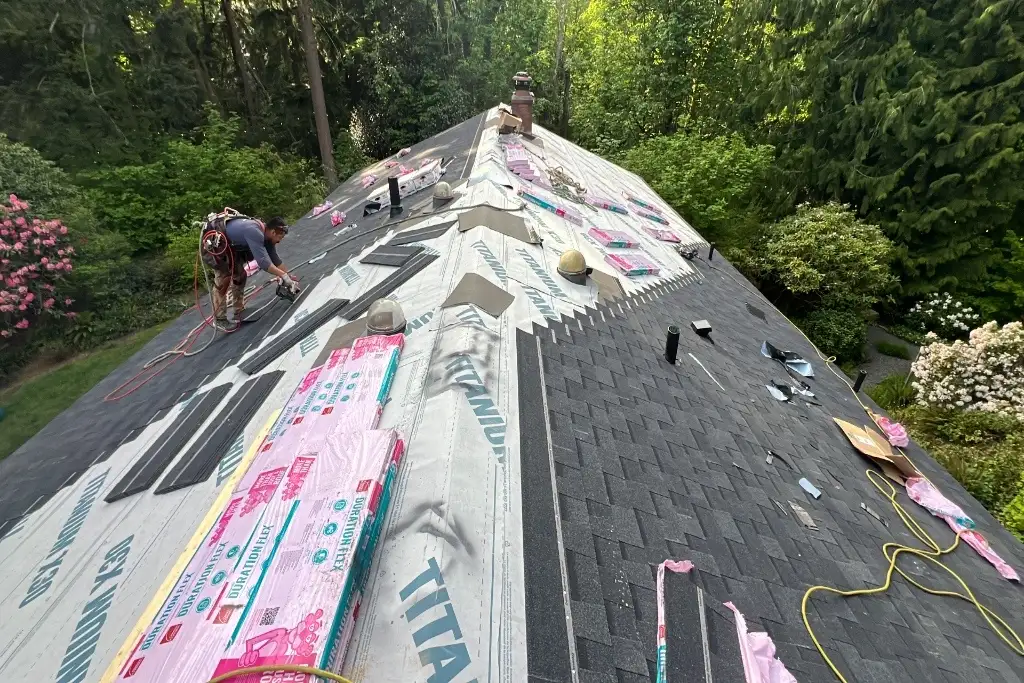
Lynnwood homeowners know that storms don’t always leave obvious damage behind. A few strong wind gusts or a heavy rainstorm can loosen shingles, bend flashing, or damage roof vents without leaving visible signs from the ground.
That’s why many leaks seem to appear “out of nowhere.”
After a storm, it’s a good idea to have your roof inspected if you notice:
- Tree branches hitting your roof
- Missing shingles around your property
- Water spots on ceilings or walls
- Loose gutters
- Debris collecting on your roof
If your roof has suffered storm damage, scheduling emergency roof repair as soon as possible can prevent water from causing additional structural damage inside your home.
How Can You Tell If Your Roof Has a Leak?
One of the biggest mistakes homeowners make is waiting until water starts dripping from the ceiling. In reality, your roof often gives you plenty of warning before that happens.
Keep an eye out for these early signs:
- Brown or yellow stains on ceilings
- Damp spots in the attic
- Mold or mildew smells indoors
- Peeling paint near the ceiling
- Missing or damaged shingles
- Sagging sections of the roof
- Water running behind gutters during rainfall
- Unexpected increases in heating or cooling bills due to wet insulation
The sooner you catch these signs, the more likely you are to avoid major repairs.
Should You Try to Fix a Roof Leak Yourself?
It can be tempting to climb onto the roof and apply a quick patch after watching a few online videos. While that might seem like a money-saving solution, roof leaks are often more complicated than they appear.
The visible leak is rarely the actual source of the problem. Water can travel several feet before it finally appears inside your home.
DIY repairs can also:
- Miss hidden water damage.
- Create additional leaks.
- Void roofing warranties.
- Put your safety at risk.
Instead of guessing, it’s better to have a professional identify the exact cause of the leak. Whether you need roof leak repair, flat roof repair near me Lynnwood, or a complete inspection, experienced roofing professionals can provide a long-term solution rather than a temporary fix.
When Should You Call a Professional Roofing Contractor?
You don’t have to wait for a major leak before calling a roofing expert.
It’s time to schedule an inspection if you notice:
- Water stains inside your home.
- Missing or damaged shingles.
- Moss covering large areas of your roof.
- Damaged flashing around vents or chimneys.
- Sagging roof sections.
- Leaks after heavy rain.
- Storm damage or fallen tree limbs.
If you’ve recently searched for “roofing company near me”, local roofing companies, or “roofers in my area”, choose a contractor with local experience. Lynnwood’s weather presents unique challenges, and working with professionals who understand the area’s climate helps ensure your roof receives the right repairs the first time.
At Skilled Roofing, we provide dependable residential roofing services designed specifically for homeowners throughout Lynnwood and the surrounding communities. From routine inspections to complete roof repair in Lynnwood, our team focuses on quality workmanship and honest recommendations you can trust.
Frequently Asked Questions
1. What causes most roof leaks in Lynnwood?
The most common causes include damaged shingles, worn flashing, clogged gutters, moss growth, aging roofing materials, and storm damage. Lynnwood’s frequent rainfall makes it especially important to address these issues early.
2. How often should I have my roof inspected?
Most roofing professionals recommend scheduling a roof inspection once a year and after any major windstorm or severe weather event. Regular inspections help identify small issues before they become expensive repairs.
3. Can a small roof leak really cause serious damage?
Yes. Even a minor leak can lead to mold growth, damaged insulation, wood rot, ceiling stains, and structural issues if water continues entering your home over time.
4. Is moss really harmful to my roof?
Absolutely. Moss traps moisture against roofing materials, lifts shingles, and speeds up roof deterioration. Removing moss professionally helps extend the life of your roof and reduces the risk of leaks.
5. How do I know if I need repairs or a new roof?
A professional inspection is the best way to determine that. If your roof has isolated damage, repairs may be enough. However, if leaks are widespread or the roof has reached the end of its lifespan, replacement may be the more cost-effective solution.
Don’t Let a Small Roof Leak Turn Into a Major Repair
Roof leaks rarely get better on their own. What starts as a small crack or loose shingle today can quickly lead to water damage, mold, and costly structural repairs after Lynnwood’s next heavy rain. The sooner you address the problem, the easier and more affordable it is to fix.
If you’ve noticed signs of a leak or simply want peace of mind, now is the perfect time to schedule a professional inspection. At Skilled Roofing, we take the time to thoroughly inspect your roof, explain our findings clearly, and recommend solutions that truly fit your home’s needs. Whether you need roof repair in Lynnwood, roof leak repair, or a complete roofing evaluation, our experienced team is ready to help.
Don’t wait for the next storm to make the damage worse. Call Skilled Roofing today at 425-737-7760 and schedule your roof inspection. Protect your home, your investment, and your family’s peace of mind before a small leak becomes a costly emergency.