
A gutter problem can start quietly. Maybe one flower bed looks washed out after a rainy week. You notice a dark mark on the fascia, or water keeps dripping from the middle of a gutter long after the heavier rain has passed. None of these signs seems urgent on its own.
For a Lynnwood home, though, repeated rain gives small drainage problems plenty of opportunities to get worse. Gutters need to move roof runoff to the downspouts without sending water over the edge, behind the fascia, or onto the ground beside the house.
When an older system struggles to do that, seamless gutter installation in Lynnwood may offer a more practical long-term solution.
What Makes a Seamless Gutter Different?
Traditional sectional gutters use several pieces joined together. Every connection relies on fasteners and sealant, and those joints can become potential leak points as the system ages.
Seamless gutters remove most joints along straight runs.
Installers measure the house and form longer sections to fit its roofline. Connections still exist at corners and downspout outlets, so the term “seamless” does not mean the entire system consists of one piece.
It simply means fewer unnecessary connections.
That distinction becomes useful when an older sectional system has already required repeated sealing or repairs at its joints.
Why Does Seamless Gutter Installation in Lynnwood Make Sense?
Lynnwood homeowners do not need dramatic storms to discover drainage problems. Several wet days can expose them just as easily.
Think about what happens at a roof valley. Two roof slopes may direct runoff toward one relatively small section of gutter. During heavier rainfall, that spot can receive much more water than another section only a few feet away.
Gutter size alone does not determine whether the system will handle that water.
Pitch, roof configuration, outlet locations, downspout capacity, and even the condition of the fascia can affect performance.
This is why gutters should fit the house rather than simply match its dimensions.
Fewer Joints Leave Fewer Places for Leaks
Look closely at an older sectional gutter and you may see where previous repairs happened. There might be dried sealant around one joint, staining underneath another, or a connection that no longer sits quite as neatly as the others.
A tiny leak can seem harmless on a dry afternoon.
During repeated rainfall, the same opening may continually drip onto fascia, siding, landscaping, or soil below.
A seamless gutter reduces the number of mid-run joints where this can happen. It can still develop leaks at corners, outlets, or damaged areas, but there are simply fewer connections to maintain along each straight section.
For homeowners repeatedly patching an aging gutter, that difference can matter.
Watch What Happens During the Next Rain
You can learn quite a bit about your gutters without climbing a ladder.
When conditions are safe, watch them from the ground during rainfall.
Does water spill over one particular corner? Is it dripping from a joint? Does one downspout carry plenty of runoff while another produces almost nothing?
Then look down.
Displaced mulch, small channels cut through soil, splash marks on siding, or puddles near the house can reveal where water is ending up.
One overflowing spot does not automatically mean you need new gutters. Leaves may be blocking the flow. A downspout could be clogged. Part of the gutter may have sagged enough to hold water.
Knowing what is actually happening makes it easier to choose the right repair.
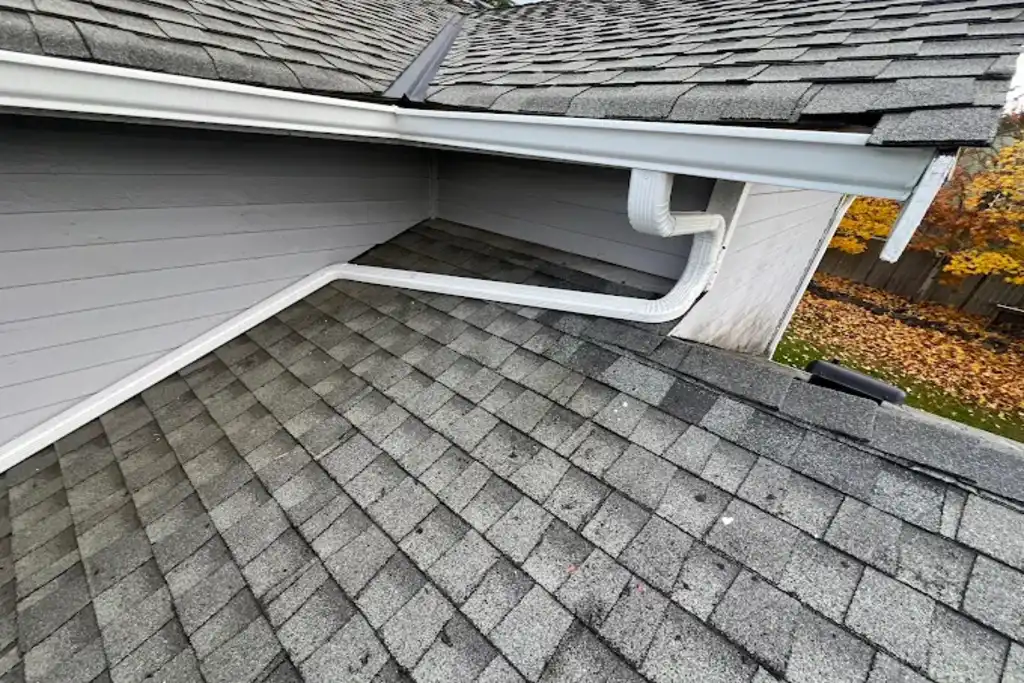
Seamless Gutters Can Clean Up an Aging Roofline
Gutters perform a practical job, but they also run across one of the most visible parts of the exterior.
Years of small repairs can leave sectional gutters with noticeable joints, mismatched sealant, uneven sections, or sagging areas. Those flaws may stand out even more after a homeowner replaces the roof, paints the exterior, or repairs the trim.
Long seamless runs create fewer visual interruptions.
That cleaner appearance is useful, but looks alone should not drive a replacement decision. If the existing system drains correctly and remains structurally sound, there may be no reason to remove it.
When performance problems already exist, improved appearance becomes an additional benefit.
Don’t Forget What Is Behind the Gutter
Sometimes removing an old gutter reveals the problem nobody could see from the yard.
Fascia can deteriorate after repeated exposure to moisture. An overflowing gutter, a leak at a joint, or water getting behind the system may contribute to damage over time.
That matters because the new gutter needs a dependable attachment point.
Installing fresh material over compromised fascia does not solve the underlying problem. The roof edge should be evaluated before the replacement system goes up.
Gutters and roofing are closely connected at this part of the house. Treating them as completely separate systems can mean overlooking the actual source of a drainage issue.
Downspouts Matter Just as Much as the Gutters
Collecting rainwater is only half the job.
Once water reaches the downspout, it still needs somewhere appropriate to go.
A beautiful new gutter will not accomplish much if the downspout releases a large amount of runoff in an unsuitable location beside the house.
Placement matters as well. Different sections of a roof may handle different amounts of water, especially around valleys and larger roof planes. Downspouts need to support the drainage demands of those areas.
Before approving a new system, ask where the water will travel from the moment it leaves the roof until it exits the downspout.
That question often tells you more than simply asking which gutter material will be installed.
Are Seamless Gutters Maintenance-Free?
No, and homeowners should be cautious of anyone suggesting otherwise.
Leaves, needles, small twigs, roof granules, and other debris can collect in any open gutter. Properties with mature trees close to the house may need more frequent attention.
Instead of following an arbitrary maintenance schedule, watch how your particular system behaves.
Water spilling over an otherwise sound gutter may indicate debris. Standing water after the rain stops can point to a blockage, sagging section, or pitch problem. An unusually quiet downspout during rainfall may also deserve inspection.
Seamless construction reduces joints. It does not eliminate maintenance.
Repair or Replace? Look at the Whole System
One leak does not automatically justify replacing every gutter.
Suppose a single corner has failed while the remaining system is secure, drains properly, and shows little deterioration. Repair may make more sense.
Now imagine several joints have already been resealed. A long section sags, corrosion appears in multiple areas, and water remains in the gutter after rain. Another repair may simply postpone the next problem.
This is where overall condition matters.
Replacement becomes more reasonable when problems are widespread or repairs keep returning. A professional evaluation should identify what has failed and explain whether correcting individual areas still offers worthwhile value.
Should Gutters Be Replaced With a New Roof?
Not necessarily.
Roof replacement provides a convenient time to inspect gutters, fascia, and drainage, but a functioning gutter system does not need replacement simply because new roofing is going on.
If the gutters are already deteriorated, sagging, leaking in several places, or poorly configured, coordinating the projects may make sense.
If they remain in good condition, keeping them may be the better decision.
Condition should determine the recommendation, not the assumption that two exterior projects must happen together.
What Should You Ask Before Hiring a Gutter Installer?
Start with the problem rather than the price.
Ask why the current system is failing. Find out whether the fascia looks sound and whether roof valleys or other high-runoff areas require special consideration. Ask where the new downspouts will sit and where they will release water.
If you have noticed something unusual, point it out.
A contractor will learn more from “this corner overflows whenever it rains hard” than from simply hearing that the gutters seem old.
The recommendation should make sense for your property rather than sound like the same solution offered to every house.
Frequently Asked Questions
Can seamless gutters still leak?
Yes. Corners, outlets, and damaged areas can leak. Seamless construction mainly removes many of the joints found along straight sectional gutter runs.
Why is water sitting in my gutters?
Standing water can result from debris, improper pitch, sagging, or a blocked outlet. Identifying the cause should come before deciding on replacement.
How often should Lynnwood gutters be cleaned?
It depends on the property. Homes near mature trees may collect leaves and needles much faster, so inspect your gutters based on actual debris accumulation rather than a universal schedule.
Are overflowing gutters always too small?
No. Clogs, sagging, poor pitch, blocked downspouts, or concentrated runoff from a roof valley can also cause overflow.
Should fascia be inspected before installing new gutters?
Yes. Gutters need a solid attachment surface. Any visible deterioration should be evaluated before installers secure the replacement system.
Professional Gutter Installation for Lynnwood Homes
At Skilled Roofing, we look beyond the visible gutter when evaluating drainage concerns. The roofline, fascia, gutter condition, pitch, and downspout layout all play a role in how successfully water leaves a home.
Sometimes the problem calls for maintenance or a targeted repair. In other situations, an aging system with recurring leaks, sagging sections, or widespread deterioration makes replacement the more practical choice.
When homeowners choose gutter installation in Lynnwood, careful measurements and thoughtful drainage planning can make just as much difference as the gutter itself.
If your gutters overflow, leak, sag, or repeatedly need repairs, it may be time to find out why.
Call Skilled Roofing at 425-737-7760 to request a free estimate and determine whether repair or seamless gutter replacement makes sense for your Lynnwood home.