You hear it upstairs on a windy afternoon: scrape, pause, scrape again. A branch from a mature evergreen is moving across the same section of your roof.
Nothing has fallen. You do not see a leak. From the yard, the shingles still appear intact. It is easy to assume the branch is more annoying than damaging.
The problem is repetition.
A branch that moves across asphalt shingles again and again can gradually wear the surface, disturb shingle edges, and leave a small section of the roof more vulnerable than the surrounding area. The damage may concentrate along a narrow path that homeowners cannot easily see from the ground.
For homeowners surrounded by mature trees, scheduling roof repair in Edmonds may become necessary even when there has been no dramatic storm or fallen tree. Understanding what repeated branch contact does to shingles can help you decide when simple tree trimming is enough and when the roof itself deserves a closer look.
Why Can a Small Branch Cause Roof Damage Without Falling?
Most people associate tree-related roof damage with a large limb crashing onto a house. That is certainly a concern, but impact damage is only one possibility.
A smaller branch can create a different problem through repeated movement.
When wind moves a branch back and forth, its bark can pass over the same shingles dozens or hundreds of times. Instead of causing one obvious break, the branch gradually creates mechanical wear.
Think about the difference between dropping an object onto a surface once and rubbing something rough across that surface every day. The second action may look less serious, but the accumulated wear can eventually become noticeable.
On a roof, repeated branch contact may contribute to:
- Localized granule loss
- Scuffed or abraded shingle surfaces
- Lifted or disturbed shingle edges
- Cracked shingles
- Damage to ridge or edge materials
- Problems around nearby flashing
- Punctures or depressions from heavier limbs
The important detail is where the damage appears. Wear concentrated directly below the path of a moving branch deserves different attention than normal, evenly distributed shingle aging.
What Happens When Bark Repeatedly Scrapes Asphalt Shingles?
Asphalt shingles have mineral granules embedded in their surface. These granules form part of the shingle’s protective exterior.
Normal aging and weather exposure can gradually loosen some granules. A rubbing branch introduces an additional source of physical abrasion.
1. The Contact Area Starts Losing Granules
A branch does not need to tear a shingle to affect it. Rough bark sliding across the surface can gradually dislodge granules.
At first, the change may be difficult to notice. Over time, however, the affected area may appear smoother, darker, or different in texture from nearby shingles.
This pattern matters during an inspection.
Granule loss spread broadly across an older roof may indicate normal aging or general deterioration. A narrow worn area that closely follows the movement of an overhanging branch points toward a different cause.
That distinction can help determine whether the problem involves a localized repair or a broader roofing concern.
2. A Branch Can Catch a Shingle Edge
Surface abrasion is not the only concern.
A smaller twig or branch can sometimes catch beneath an exposed shingle edge as it moves. Repeated movement may disturb the edge or weaken an existing seal.
Once a shingle no longer lies as intended, wind-driven rain has a better opportunity to reach beneath the exposed roofing surface.
That does not mean every branch touching a roof automatically causes a leak. It means persistent contact creates a condition worth investigating, particularly when you can see lifting, cracking, or displacement.
3. A Heavier Limb Creates a Different Type of Damage
A thick limb pressing against the roof presents a different concern from a lightweight branch brushing the shingles.
Wind can move a heavy limb against the same area with considerably more force. Depending on the size of the limb and the force involved, the contact may crack shingles, damage underlying materials, or create a depression or puncture.
A heavy limb resting on the roof should receive prompt attention. Avoid climbing onto the roof or attempting to drag the limb off yourself, especially if its weight has damaged the surface beneath it.
Does Every Branch Touching the Roof Mean You Need Repairs?
No.
Seeing a branch touch your shingles does not automatically mean the roof requires repair. The condition of the roofing materials matters more than the contact alone.
This is where a proper evaluation becomes useful.
When assessing possible branch damage, a roofer can look at questions such as:
- Does the branch touch the roof only occasionally, or does it move across it whenever the wind blows?
- Is the wear concentrated along a recognizable contact path?
- Have shingles lost a noticeable amount of surface granules?
- Are any shingle edges lifted or displaced?
- Are there cracks, punctures, or depressions?
- Has the branch affected a ridge cap, roof edge, vent, or flashing?
- Does the surrounding roofing remain in serviceable condition?
- Is there evidence that water has reached materials beneath the shingles?
The answers help separate harmless or minimal contact from actual roofing damage.
This approach also prevents homeowners from assuming that every tree near the house requires expensive work. Sometimes removing the source of contact and monitoring the area is appropriate. In other situations, roof repair in Edmonds may be necessary because the branch has already compromised roofing materials.
What Can You Safely Check From the Ground?
You do not need to walk across your roof to look for clues.
In fact, homeowners should avoid climbing onto steep, wet, damaged, or slippery roofing surfaces. You can often spot useful signs from the driveway, yard, an upstairs window, or another safe vantage point.
Pay particular attention to the area directly below or beside the branch.
Look for:
- A branch touching the shingles when the wind moves
- A smooth or unusually dark strip on the roof
- Shingles that appear lifted or out of line
- A broken or missing piece of shingle
- A visible dent or depression beneath a heavier limb
- Loose roofing material after windy conditions
- Granules accumulating below the affected roof section
- A branch resting directly on the roof
Indoor clues can matter too. A new ceiling stain or signs of moisture in the attic justify professional attention, particularly when they appear near a roof area already affected by a tree.
Do not rely on the absence of an indoor stain as proof that the shingles remain undamaged. Surface wear can exist before water reaches the living space.
Why Doesn’t Trimming the Branch Solve the Entire Problem?
Trimming stops future contact. It cannot reverse damage that has already occurred.
If a branch has spent months scraping the same group of shingles, removing it will not put lost granules back on the surface. It will not flatten a cracked shingle or repair damaged material beneath the roof covering.
That is why tree work and roofing work solve two different parts of the problem.
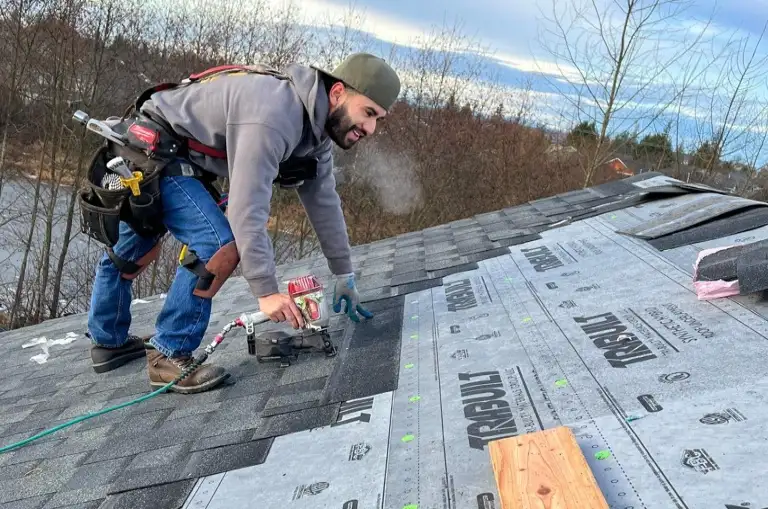
A qualified tree-care professional can assess large, unstable, elevated, or difficult-to-remove branches. A roofing professional can evaluate what happened to the roof underneath them.
After the branch has been safely addressed, the newly exposed roofing area may reveal damage that was difficult to see before.
A roofer may examine:
- Shingle surfaces
- Shingle edges and seals
- Ridge caps
- Roof edges
- Nearby flashing
- Underlayment when exposure is warranted
- Roof decking when impact damage is suspected
- Signs of water intrusion
This sequence makes more sense than assuming tree trimming alone has restored the roofing system.
When Does Branch Damage Require Roof Repair in Edmonds?
The extent of the damage determines the appropriate response.
Suppose a small number of shingles show concentrated abrasion or damage while the surrounding roofing remains in good condition. In that situation, a roofing contractor may determine that localized work can address the affected area.
The situation changes when a heavy limb creates a puncture, several shingles move out of position, or damage reaches materials below the shingles. A contractor may need to expose more of the affected area to understand how far the damage extends.
Prompt professional evaluation becomes particularly important when you notice:
- Active water entering the house
- A puncture or visible opening
- A heavy limb resting on the roof
- A sagging or depressed section
- Multiple broken or displaced shingles
- Exposed roof decking
- Damaged flashing near the contact point
- Water near ceiling-mounted electrical fixtures
If water appears around a light fixture or another electrical component, avoid touching the wet area or fixture and address the situation promptly.
Can a Tree Affect the Roof Even When Its Branches Don’t Touch?
Yes, but this is a separate issue from mechanical abrasion.
A tree canopy can shade part of the roof, while needles, leaves, cones, and twigs may settle on the roofing surface. Those conditions can affect how quickly an area dries and how freely water moves off the roof.
However, these indirect tree-related issues should not be confused with rubbing damage.
A branch physically contacting shingles creates a distinct wear pattern. Debris accumulation and shade create different maintenance concerns. Separating these causes helps homeowners avoid treating every tree-related roof issue as the same problem.
For this article’s specific concern, the key question remains simple:
Is something repeatedly touching, scraping, lifting, pressing against, or striking the roofing material?
If the answer is yes, inspect that contact area rather than evaluating the roof only for general tree debris.
How Can You Reduce the Chance of the Problem Returning?
Prevention starts with noticing branch movement, not simply measuring how close a tree appears to the house.
A branch that looks safely separated from the roof on a calm afternoon may move considerably when the wind picks up. Tree growth can also reduce clearance over time.
Consider these practical steps:
Watch Branches During Moderate Wind
Observe the roof from a safe location. You may discover contact that never occurs when the branches are still.
Address Repeated Contact
If a branch regularly brushes the roof, have an appropriate tree-care professional assess it before months of movement create additional wear.
Check the Roof After Branch Removal
Once foliage no longer blocks the view, look at the previously covered area from the ground or another safe location. Differences in color, texture, or shingle position may become easier to identify.
Inspect After a Limb Strike
A limb that strikes the roof deserves more attention than one that merely hangs nearby. Even when it rolls or falls away, the impact area may still contain damage.
Avoid Setting a Universal Branch-Clearance Rule
The appropriate clearance varies with tree species, branch size and flexibility, roof shape, wind exposure, and surrounding conditions. A qualified arborist can assess the tree rather than relying on an arbitrary distance that may not suit the property.
Why Is Early Evaluation Better Than Waiting for a Leak?
A leak is evidence that water has already found a route through or around part of the roofing system. It should not be the only trigger for investigating visible exterior damage.
Branch abrasion gives homeowners something useful: an identifiable cause and a specific area to examine.
If you know a limb has repeatedly scraped one roof slope, you do not have to wait for an interior symptom before having that location evaluated.
Early roof repair in Edmonds, when actually needed, may also remain more localized if the damage affects only a limited group of shingles and surrounding components remain serviceable.
The goal is not to replace roofing materials unnecessarily. It is to determine whether repeated contact has changed the condition of the roof and address confirmed damage appropriately.
Frequently Asked Questions
Can a small tree branch really remove shingle granules?
Yes. Repeated physical friction can gradually dislodge surface granules. The pattern and severity depend on factors such as the branch, amount of movement, duration of contact, and condition of the shingles.
Does a branch have to break a shingle to cause a problem?
No. A branch may abrade the surface or disturb an edge without splitting the shingle in half. A professional inspection can determine whether the contact caused functional damage.
Should I call a roofer or an arborist?
It depends on the immediate problem. A qualified tree-care professional should assess hazardous, unstable, or difficult-to-remove limbs. A roofing contractor should evaluate suspected damage to shingles and the roofing system. Some situations require both.
Will homeowners insurance pay for tree-related roof damage?
Coverage varies by policy and circumstances. The cause of the damage, policy terms, exclusions, maintenance history, and insurer’s assessment may affect coverage. Document visible damage safely and contact your insurance provider for guidance about your specific policy.
Should I inspect the roof after an overhanging branch gets trimmed?
Yes, particularly when the branch previously rubbed against or struck the roof. Removing it can expose the affected shingles and make signs of abrasion, displacement, or impact easier to identify.
Don’t Let a Rubbing Branch Keep Working on the Same Shingles
Tree-related roof damage does not always arrive with a crash.
Sometimes it starts with the same quiet scraping sound every time the wind moves through the yard.
Repeated contact can concentrate wear on a small group of shingles, remove surface granules, disturb edges, or cause more significant damage when a heavier limb presses against or strikes the roof. Trimming the tree can stop further contact, but the roofing area underneath still needs attention if damage has already occurred.
If a branch has been scraping, pressing against, or striking your roof, Skilled Roofing can inspect the affected area and determine whether roof repair in Edmonds is appropriate based on the roof’s actual condition.
Call 425-737-7760 to schedule a professional roof inspection and find out what is happening beneath that overhanging branch.