Your roof was cleaned, the green patches disappeared, and everything looked good again. Then, sometime later, you noticed a small patch returning. Even more frustrating, it appeared in almost the exact same place as before.
So, did the roof cleaning fail?
Usually, that is not the most useful way to look at recurring moss. Professional cleaning addresses the growth present at that moment, but your property continues to influence what happens afterward. Certain sections may repeatedly experience conditions that allow new growth to establish sooner than others.
For homeowners considering roof cleaning in Edmonds, the pattern of returning moss can reveal more than the moss itself. Where it appears, which section develops it first, and how its pattern changes over time can help homeowners understand what makes their individual roof more susceptible to regrowth.
Did Your Roof Cleaning Fail If Moss Came Back?
A clean roof does not become permanently resistant to future moss growth on roof or organic buildup.
Think of professional cleaning as addressing the condition of the roof at a specific point in time. Once the service ends, the roof continues interacting with everything around it.
The seasons change. Trees continue growing. Shadows shift. Surrounding vegetation changes. Nearby structures affect how different roof sections experience sunlight and exposure.
Because these influences continue, the possibility of future growth continues too.
The more useful question is not whether moss can ever return. Instead, homeowners should ask:
Why does it keep returning here?
That question shifts the conversation from repeated removal to understanding recurrence.
Why Does Moss Reappear in the Same Spot?
Returning moss often follows a recognizable pattern.
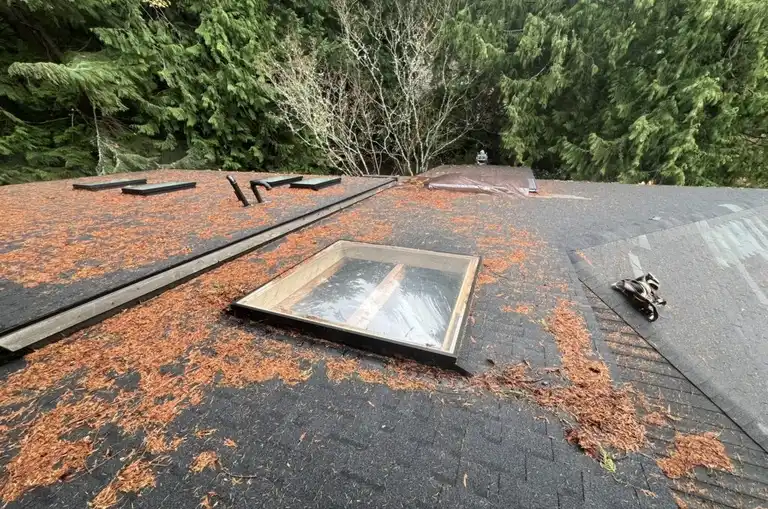
Imagine looking at your roof several months after cleaning. Most of it still looks clear, but a small section near a roof transition has started turning green. Or perhaps the first visible patch always appears on the slope you can see from your backyard.
Repeated location matters.
A roof is not one identical surface from end to end. Architectural features and surroundings can cause individual sections to experience different conditions.
A chimney can cast a shadow across one area. A dormer can change how an adjacent section receives sunlight. A taller portion of the home can shield a lower roof section during part of the day.
The result is that two areas separated by only a few feet can behave differently.
If moss repeatedly chooses the same location, that pattern deserves attention.
Can Different Parts of One Roof Behave Differently?
Absolutely.
Consider a typical home with a main roof, attached garage, several slopes, and a few architectural transitions.
The upper roof may remain exposed for much of the day. Meanwhile, a lower garage section may sit beside the taller wall of the house. Another small section may sit behind a chimney. A dormer may affect another area.
Each section has its own relationship with the surrounding environment.
This creates what you might think of as small roof zones.
One zone may remain relatively clear long after cleaning, while a shaded or damp roof section may show the first signs of moss regrowth much sooner.
This concept is especially useful when evaluating recurring moss because it prevents homeowners from treating the entire roof as though every square foot experiences identical conditions.
A professional evaluation can consider these individual areas rather than focusing only on how much total moss appears.
Does the Location of Returning Moss Tell You Anything?
Sometimes, location provides the most useful clue.
Instead of looking only at the amount of moss, note its position.
For example, recurring growth might consistently appear:
- Behind a chimney
- Along the edge of a lower roof section
- Beside a dormer
- Beneath one particular section of tree canopy
- Near a transition between two roof planes
- On a section blocked by another part of the house
- In a small area that receives limited direct exposure
A single observation cannot diagnose a roofing condition. However, a repeated pattern gives homeowners and roofing professionals more information to work with.
This is one reason taking a few ground-level photographs after professional cleaning can be useful.
Months later, you can compare what you see rather than relying on memory.
Why Doesn’t Your Neighbor’s Roof Cleaning Schedule Apply to Your Home?
It is tempting to look at another house nearby and compare maintenance schedules.
Your neighbor may tell you that their roof stays clean for years. Meanwhile, you start noticing small patches much sooner.
That does not automatically mean anything went wrong with your previous service.
Even neighboring homes can have significant differences.
Your roof may have a different:
- Pitch
- Age
- Layout
- Roofing material
- Number of dormers
- Chimney position
- Tree exposure
- Building height
- Previous maintenance history
One property may also change faster than another as landscaping matures or surrounding properties undergo renovations.
For this reason, a fixed cleaning schedule based on what works for someone else may not make sense for your home.
Roof cleaning in Edmonds should account for the characteristics of the individual property rather than relying exclusively on a general timeline.
Could Your Property Have Changed Since the Last Cleaning?
This is another factor homeowners can easily overlook.
The environment around a roof does not remain frozen in time.
A young tree can become significantly larger within several years. Branches can extend farther toward the house. New landscaping can change the surroundings. A neighboring property may add a structure or complete an addition.
Even your own home may change.
Perhaps you added a covered patio. Maybe you completed an addition. Perhaps a nearby tree was removed, changing how one side of the property experiences sunlight.
These changes can alter which roof sections develop organic growth first.
If your moss pattern today looks different from the pattern you remember several years ago, consider what else has changed around the property.
That information can be valuable during a professional evaluation.
Can Returning Moss Act Like a Map of Your Roof?
This is one of the most useful ways to think about recurring growth.
Instead of viewing every new green patch as an isolated problem, look at the overall pattern.
Imagine dividing your visible roof into several zones.
Zone A: Remains relatively clear.
Zone B: Develops a small patch first.
Zone C: Starts changing later.
If you observe a similar sequence after multiple cleanings, you have identified a pattern specific to your property.
That pattern can help answer better questions during your next roofing evaluation.
Rather than saying, “My moss came back,” you can tell the roofing professional:
“This section always starts showing growth first.”
That is much more useful information.
Experienced roofers can then consider the location, roof configuration, surrounding features, and visible condition of that particular section.
Should You Track How Quickly Moss Returns?
You do not need to create a complicated maintenance log, but keeping a basic visual record can help.
After cleaning, take a few photographs from safe locations on the ground. Try to photograph the same visible roof sections each time.
Check those areas occasionally.
You are looking for changes such as:
- A previously affected area turning green again
- Growth beginning in a new location
- One section changing faster than the others
- A recurring patch expanding differently than before
This gives you a simple timeline.
The goal is not to diagnose the roof yourself. It is to recognize when your roof’s usual pattern changes.
That distinction matters because an unusual change may justify a closer professional look.
What If Moss Returns Somewhere New?
A new location deserves a little more attention than a familiar recurring patch.
Suppose one small section has historically developed moss first. After the next cleaning, that area behaves as expected, but another section that previously stayed clear begins developing growth.
Ask what changed.
Did vegetation grow closer to that area?
Did the surrounding property change?
Is the new growth concentrated around a particular architectural feature?
Has that part of the roof changed visually in another way?
You may not be able to answer these questions from the ground, and you should not climb onto the roof to investigate.
However, recognizing that the pattern changed gives you a reason to mention it when speaking with a roofing professional.
Does Fast Regrowth Mean You Need Another Cleaning Immediately?
Not necessarily.
A few early signs of returning growth do not automatically tell you what service your roof needs next.
The extent of growth, roof condition, roofing material, previous service, accessibility, and location of recurrence can all influence the appropriate response.
This is where a professional roof inspection becomes valuable, especially when moss buildup repeatedly affects the same section.
Instead of automatically repeating the same service because you see green again, ask a roofer to consider the pattern.
You may need cleaning. You may simply need continued observation. A roofing professional may also notice another condition that deserves attention.
The important point is to make the decision based on the roof you have today rather than automatically repeating what you did previously.
What Should You Remember After Roof Cleaning in Edmonds?
The period after cleaning provides an opportunity to learn how your roof behaves.
Start with three simple observations.
Remember the First Area That Changed
If moss eventually returns, note where you saw it first.
Repeated recurrence in one location establishes a pattern.
Notice Whether the Pattern Has Shifted
If growth starts somewhere different, consider whether the property or surrounding environment has changed.
Compare, Don’t Assume
Compare current conditions with previous observations rather than assuming every green patch means the same thing.
These habits require very little effort, but they give you better information when it is time to speak with a roofing professional.
Why Is a Property-Specific Evaluation More Useful Than a Generic Answer?
Existing Skilled Roofing resources already explain that moss can develop under the moisture and tree-cover conditions common around Edmonds.
But knowing that moss grows in Edmonds does not answer the question homeowners with recurring growth actually have:
Why does it keep coming back on my roof?
That answer depends on the property.
A useful roof evaluation considers where previous growth occurred, whether the pattern has changed, how the roof is configured, what surrounds the affected section, and what the roofing surface currently looks like.
This property-specific approach helps homeowners avoid treating every recurrence as an identical event.
At Skilled Roofing, our team can evaluate the current condition of your roof and help you understand whether returning moss calls for professional cleaning, continued monitoring, or closer attention to a particular roof section.
Frequently Asked Questions
1. Why does moss return after roof cleaning?
Conditions around the roof may continue supporting new growth.
2. Can moss return to the exact same roof section?
Yes. Some sections can repeatedly become favorable locations for regrowth.
3. Why is moss returning faster this time?
Changes around your property may alter how individual roof areas behave.
4. What does it mean if only one roof slope grows moss?
That slope may experience different conditions than the rest of your roof.
5. Should I pay attention if moss starts growing somewhere new?
Yes. A new growth pattern may indicate that conditions around that roof section have changed.
Moss Came Back? Understand the Pattern Before Starting Over
Finding moss after a previous cleaning can be disappointing, but it can also tell you something useful about your roof.
Do not focus only on the fact that moss returned.
Look at where it returned, whether it appeared in the same location, how the pattern compares with the past, and whether anything around your property has changed.
Those observations turn a frustrating recurring problem into useful information.
If moss is returning and you are unsure what your roof needs next, Skilled Roofing can take a closer look and provide a recommendation based on the current condition of your Edmonds home.
Contact us at 425-737-7760 today to schedule an evaluation and determine the right next step for professional roof cleaning in Edmonds.