
You already dealt with the leak once. Someone repaired the roof, the dripping stopped, and the ceiling finally dried. Then another rainy day arrives in Lynnwood, and there it is again. The same damp spot. The same drip. The same frustration.
When a leak returns to the same place, it does not always mean the new roofing material failed. The first repair may have corrected one defect while missing another water entry point that feeds the same interior location. In other cases, the repair may have focused too closely on the area above the stain.
This is where roof repair in Lynnwood becomes less about patching and more about diagnosis. To stop a recurring leak, you need to understand why water keeps reaching that particular spot.
Why Can the Same Spot Leak Even After a Roof Repair?
A recurring leak creates an important clue: the destination may stay the same even when the entry point changes.
Your roof contains slopes, joints, fasteners, penetrations, underlayment, decking, and framing. Once water gets beneath the exterior roofing material, these components can influence where it travels.
That means two separate openings can sometimes send water toward the same low point.
Consider a simplified example. A homeowner notices water above a bedroom window. A damaged shingle sits nearby, so the shingle gets replaced. The leak disappears.
Several weeks later, the stain returns.
The new shingle may still be performing correctly. A second vulnerability farther upslope could be directing water toward the same section of decking. From inside the bedroom, both problems look identical.
That is why a returning leak requires a different question.
Instead of asking, “Where did we repair the roof last time?”, ask “What other pathway could bring water to this same location?”
Was the First Repair Made Where the Water Came Out Instead of Where It Got In?
This distinction can completely change roof leak detection, especially when a previous repair targeted the visible symptom instead of the actual leak source.
The location where water becomes visible inside your home is the exit point. The opening where rain gets through the roofing system is the entry point.
Those two locations do not have to sit directly above one another.
Once water gets underneath the roof covering, it can follow a surface before gravity finally pulls it downward. A roofing professional may need to work backward from the interior symptom instead of assuming the defect sits directly above it.
This matters especially when a roof has already received one repair.
If someone previously repaired the obvious area above the stain, a second inspection should widen the search rather than repeat the same repair.
Could the First Repair Have Fixed a Real Problem, Just Not the Only Problem?
A returning leak does not automatically prove that the original repair was pointless.
Sometimes, the roofer really did find and correct a defect.
The problem is that roofs can develop more than one vulnerability within the same drainage path.
For example, one section might contain a damaged shingle and a separate weakness at a nearby transition. Repairing the shingle eliminates one route, but the second route remains available under the right conditions.
This situation can confuse homeowners because the leak may:
- Stop completely for several weeks
- Remain absent during light showers
- Return during a longer period of rain
- Appear in exactly the same interior location
- Seem smaller or larger than it did before
The pattern matters.
Instead of immediately applying another patch to the previous repair, a roofer should consider whether another defect is sending water into the same pathway.
What If the Previous Repair Was Too Small for the Actual Problem?
A visible defect can make a repair area appear smaller than it really is.
Imagine finding one cracked shingle and replacing it. That makes sense if the damage truly ends there.
But what if movement in that section has affected neighboring shingles? What if several fasteners no longer hold correctly? What if a nearby transition contributes to the same problem?
Repairing one isolated component may improve the situation without restoring the entire vulnerable section.
This does not mean every leak requires a large roofing project. It means the repair boundary should match the damage boundary.
When evaluating recurring roof repair in Lynnwood, a roofing professional should determine how far the problem extends before deciding how much material needs attention.
A slightly broader repair can sometimes make more sense than repeatedly returning to one tiny spot.
What If the Shingles Were Repaired but the Transition Wasn’t?
This scenario deserves attention because homeowners naturally focus on shingles. They are the part of the roof you can easily see from the ground.
However, many roofs contain places where one surface meets another.
Think about where:
- A roof slope meets a vertical wall
- Roofing meets a chimney
- A vent passes through the roof
- Two roof sections intersect
- An addition connects to the original structure
These transitions require water to move around an interruption in the normal roof surface.
Now imagine that several shingles near one of these areas get repaired. The shingles may no longer be the problem, but the nearby transition could still provide an entry point.
The homeowner sees the same ceiling leak and assumes:
“Those new shingles are leaking.”
In reality, the water may simply be passing underneath or beside them from somewhere else.
This is why diagnosing a recurring leak requires looking at how the surrounding roof components work together, not just inspecting the material installed during the last repair.
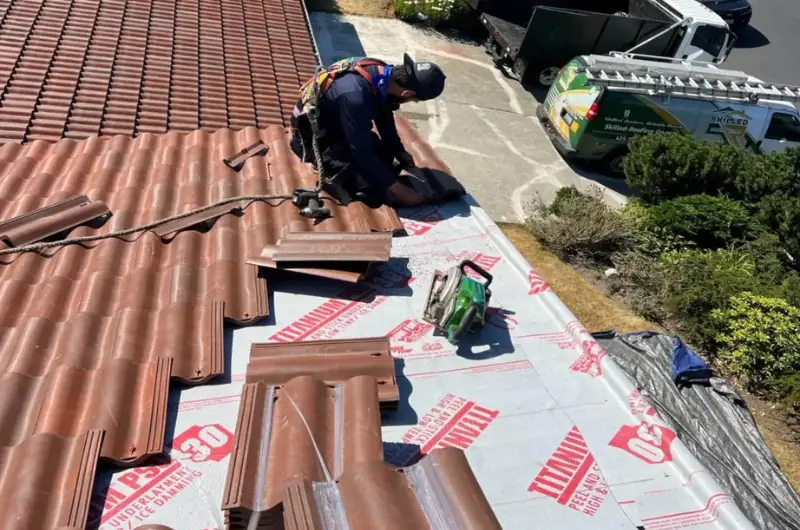
Could an Old Repair Be Hiding the Clue a Roofer Needs?
Repeated repairs can sometimes make diagnosis more complicated.
A roof that has received several spot repairs may contain layers of roofing cement, sealant, replacement shingles, exposed fasteners, or other repair materials.
Each previous repair changes what the next roofer sees.
Suppose an old patch covers the original defect. The patch may hide a joint, fastener, seam, or transition that needs closer inspection. Adding another layer of sealant over the same location can make it harder to understand how water originally entered.
This is one reason another quick application of roofing cement may not be the best response to a recurring leak.
Sometimes the repair area needs to be carefully evaluated so the roofer can see what is happening beneath or around previous repair materials.
The goal should be to understand the assembly, not simply add another layer over it.
Why Can a Repair Work During One Rainfall but Fail During Another?
This is one of the most useful clues a Lynnwood homeowner can provide.
Not every rainfall challenges a roof in exactly the same way.
The amount of rain, its duration, and the direction it reaches the roof can change which areas receive water.
A repair might appear successful through several ordinary showers. Then a longer period of rain exposes another opening nearby.
That does not necessarily mean the repaired material suddenly failed.
Instead, the different conditions may have activated a second water route that the earlier repair never addressed.
If the leak returns, try to remember:
- How long had it been raining?
- Did the leak start immediately or several hours later?
- Was the previous repair completely dry during earlier rain?
- Did the stain appear in precisely the same location?
- Was the amount of water different this time?
These details can give a roofing professional valuable diagnostic information.
Can the Shape of the Interior Stain Tell You Anything?
The stain itself should not determine where someone repairs your roof, but changes in the stain can help document the problem.
Take a photo when you first notice the returning leak.
Then compare the stain during future rainfall.
Does it expand from the same edge? Does a different portion become darker first? Does water drip from one point while the surrounding area stays dry?
You can also note when the leak begins relative to the start of the rain.
This creates a simple record for the roofer instead of relying on memory after everything dries.
You are not trying to diagnose the roof yourself. You are giving the professional more information about how the leak behaves.
For a problem that has already survived one repair, those details can prove useful.
Why Should the Second Inspection Be Different From the First?
If the same roof leak returns, simply repeating the original inspection may produce the same conclusion.
The second evaluation should start with one assumption:
Something about the first explanation was incomplete.
That encourages a wider roof inspection and leak-tracing approach instead of another localized patch.
A roofing professional may need to:
- Review what was repaired previously
Knowing exactly which materials were replaced or sealed creates a starting point. - Confirm whether that repair remains intact
If it does, the search should move beyond the repaired spot. - Trace the interior location carefully
The roofer can use the stain as a reference point without assuming the exterior defect sits directly above it. - Inspect farther upslope
Water naturally moves downward, so areas above the suspected location deserve attention. - Examine connected roof transitions
A nearby wall, penetration, intersection, or other change in the roof surface may influence the water path. - Look for more than one possible entry point
A recurring leak may involve several small defects rather than one obvious opening. - Define the full repair area before starting work
The new repair should address the identified pathway instead of automatically duplicating the previous patch.
This process turns the second visit into an investigation rather than another guess.
When Should You Stop Repatching the Same Area?
One failed repair does not necessarily indicate a pattern. Repeated repairs in the same location do.
If a leak keeps returning, continuing to cover the same small area can become expensive without producing a lasting result.
You should consider requesting a broader evaluation when:
- The same leak has already received more than one repair
- Previous repair material still looks intact
- The leak disappears and returns unpredictably
- Different contractors have patched the same location
- The interior stain keeps returning without an obvious exterior defect
- Each new repair provides only temporary relief
At this stage, the goal should shift from “patch this spot” to “explain why water keeps reaching this spot.”
That change in approach can make all the difference.
What Should You Tell a Roofer About a Previously Repaired Leak?
Your repair history can save valuable diagnostic time.
Before scheduling roof inspection, gather whatever information you have about the previous work.
Tell the roofer:
- Where you first noticed the leak
- Approximately when it began
- What the previous repair addressed
- How long the leak stayed away afterward
- What weather conditions were present when it returned
- Whether the stain returned in exactly the same location
- Whether anyone has repaired that section more than once
If you have photos from before, during, or after the previous repair, keep them available.
This information helps the roofer understand the sequence of events.
The question is no longer simply “Why is my roof leaking?”
It becomes “What changed after the repair, and what stayed the same?”
That is a much more useful starting point.
How Does Skilled Roofing Approach a Leak That Keeps Coming Back?
A recurring leak deserves more than another assumption.
At Skilled Roofing, the objective is to understand why water continues reaching the same area before recommending the next roof repair in Lynnwood.
That means considering the previous repair, the location of the interior symptom, surrounding roof components, possible water pathways, and whether more than one vulnerability may contribute to the problem.
This approach can help distinguish between a failed repair and a separate problem that happens to produce the same symptom.
For homeowners, that distinction matters. You want to know what you are repairing and why, especially after you have already paid to address the problem once.
Frequently Asked Questions
1. Why does my roof keep leaking in the same spot after a repair?
The original repair may have fixed one problem while another entry point remained. Water can travel beneath roofing materials and reach the same interior spot from a different location.
2. Does a recurring roof leak mean the previous repair failed?
Not necessarily. The previous repair may still be intact. Another nearby weakness could allow water to follow the same path and create a similar leak.
3. Can two different roof problems cause a leak in the same ceiling spot?
Yes. Separate openings can sometimes direct water toward the same interior area. Fixing one problem may stop the leak temporarily while another entry point remains.
4. What information should I give my roofer about a recurring leak?
Share where the leak appeared, what was previously repaired, how long the area stayed dry, and when the water returned. Previous repair photos can also help with the evaluation.
5. When should I schedule roof repair in Lynnwood for a recurring leak?
Schedule roof repair in Lynnwood when a previously repaired leak returns or continues during rainfall. Skilled Roofing can evaluate the repair history and surrounding roof areas to determine what may still need attention.
Don’t Repair the Same Spot Again Without Understanding What Changed
When a leak returns after a previous repair, what happened between the first fix and the new leak can provide valuable clues. How long did the area stay dry? Did the water return under different conditions? Is the previous repair still intact? Did the stain reappear in precisely the same place? Those details can help build a clearer picture of what the first repair addressed and what may have gone unnoticed.
At Skilled Roofing, we take previous repair history into account when evaluating a recurring leak. Our team can compare the location of earlier work with the returning interior symptom and examine surrounding areas that may be directing water toward the same spot.
If you need roof repair in Lynnwood because a leak you thought was fixed has returned, contact us at
425-737-7760 and share any photos, repair details, or observations you have from the first time it happened. Give your roofer the full story of the leak, not just the spot where it showed up again.